





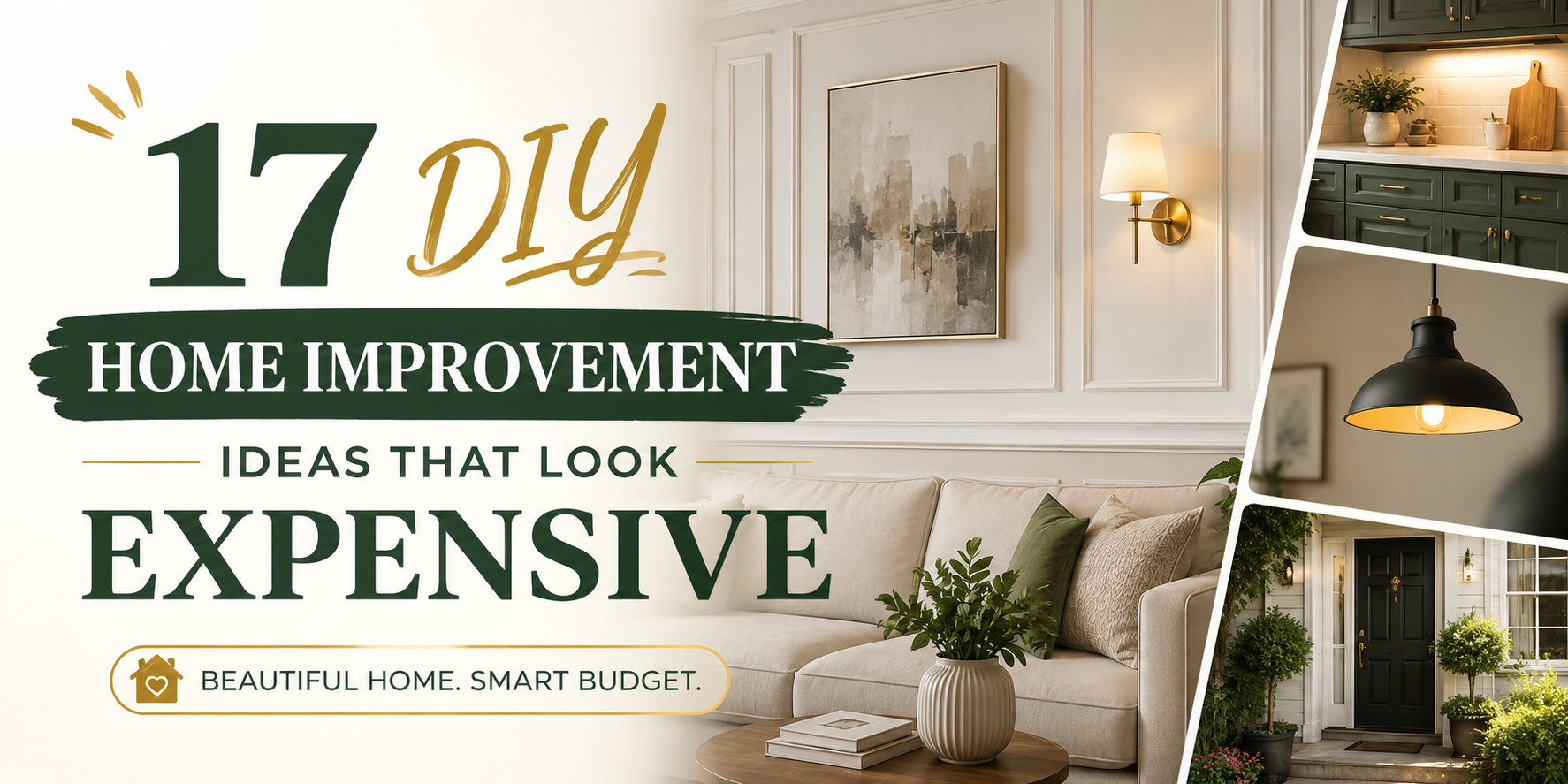
You don’t need a huge renovation budget to make your home look stylish, modern, and expensive. The best DIY home improvement ideas focus on the details people notice most: fresh paint, upgraded lighting, architectural wall treatments, better hardware, large-scale artwork, window treatments, curb appeal, and a clutter-free layout.
Recent 2026 home-improvement coverage continues to emphasize low-cost, high-impact DIY projects that can refresh a home without a major renovation. This Old House, for example, recently published more than 100 DIY projects designed to improve a home for under $100, while HGTV highlights weekend projects that can take a home from builder-grade to more custom-looking.
The secret isn’t spending more. It’s choosing high-impact home upgrades and finishing them carefully.
What Are the Best DIY Home Improvement Ideas on a Budget?
The best budget home improvement ideas are projects that change a large or highly visible part of a room without requiring a complete remodel. Painting, lighting, cabinet hardware, wall molding, curtains, mirrors, artwork, landscaping, and entryway updates can make a home feel more custom and polished.
If your budget is limited, focus on scale, consistency, lighting, texture, and clean finishes before buying lots of new décor.
Here are 17 DIY home projects that can create an expensive-looking result without a major renovation.
1. Add Board-and-Batten or Picture-Frame Wall Molding
Architectural wall treatments are one of the easiest ways to give a plain room a custom, built-in appearance.
DIY board-and-batten, wainscoting, or picture-frame molding can transform a bedroom, dining room, hallway, entryway, or living room with relatively inexpensive trim, adhesive, caulk, and paint.
How to make DIY wall molding look expensive
- Measure the wall carefully before cutting.
- Keep every section evenly spaced.
- Use a level rather than relying on the floor or ceiling.
- Fill nail holes.
- Caulk visible seams.
- Prime when appropriate.
- Paint the finished wall and trim consistently.
A single accent wall can be enough to create a focal point.
Best for: Bedrooms, dining rooms, living rooms, hallways, and entryways.
Why it works: Architectural detail makes a basic room feel more custom without the cost of professional millwork.
2. Try Color Drenching for a Designer Look
Color drenching is a simple painting technique in which the same or closely related color is carried across multiple surfaces, such as the walls, trim, doors, and ceiling.
The result is a more cohesive and immersive room. Recent designer advice also recommends color drenching as an easy way to refresh a living room without major construction.
Consider:
- Warm neutrals
- Deep greens
- Muted blues
- Earthy browns
- Soft off-whites
Before painting the entire room, test samples under both daylight and artificial lighting.
Budget benefit: Paint can change the entire character of a room without replacing furniture or flooring.
3. Replace Builder-Grade Light Fixtures
Changing outdated lighting is one of the fastest home upgrades on a budget.
Replace a basic ceiling fixture with a more distinctive pendant, chandelier, sconce, or semi-flush light where appropriate. A new fixture can create a focal point and make an otherwise ordinary room feel more intentional.
You can also improve the atmosphere with better LED bulbs. ENERGY STAR notes that LED lighting can use up to 90% less energy than incandescent lighting and generally lasts much longer.
Layer your lighting
A polished room usually benefits from three types of lighting:
- Ambient lighting for overall illumination
- Task lighting for activities such as reading, cooking, or working
- Accent lighting for artwork, shelves, plants, or architectural features
Safety: If a project involves new wiring or electrical work beyond your expertise, hire a qualified electrician.
4. Upgrade Cabinet Knobs and Pulls
New cabinet hardware is a small DIY home improvement project with a surprisingly large visual effect.
You can update:
- Kitchen cabinets
- Bathroom vanities
- Laundry cabinets
- Built-in storage
- Dressers and furniture
Choose hardware that coordinates with the rest of the room.
For a professional-looking finish
Measure existing holes before ordering replacement pulls and use a template when drilling new holes. Consistent placement makes inexpensive hardware look much more polished.
Best part: You can keep perfectly functional cabinets while giving them a completely different appearance.
5. Frame a Builder-Grade Bathroom Mirror
A large frameless bathroom mirror can sometimes make a bathroom feel unfinished. Adding a simple frame can give it a more custom appearance.
Use suitable trim or wood and finish it with paint or stain that coordinates with the vanity, wall color, and other bathroom finishes.
For a modern bathroom, try a simple, clean profile. For a traditional space, wider trim can create a more substantial look.
Important: Choose a mounting method appropriate for the mirror and its weight.
6. Hang Full-Length Curtains
New window treatments are one of the simplest ways to make a room look taller and more sophisticated.
Instead of placing a curtain rod directly on the window frame, consider mounting it higher and wider when the wall layout allows. Let the curtains extend toward the floor.
For a high-end look, choose curtains with:
- Full length
- Adequate width
- A substantial-looking fabric
- Simple colors or patterns
- A finish that complements the room
Curtains that are too short or narrow can make otherwise attractive windows look smaller.
7. Make Your Own Oversized Wall Art
Large-scale artwork can become an instant focal point.
Instead of filling a large wall with several tiny pieces, create one substantial DIY art piece using:
- A public-domain image
- An abstract canvas
- Textured artwork
- Fabric
- Wallpaper
- Multiple panels arranged as one composition
The goal is to match the size of the artwork to the furniture and wall.
Budget home decor tip: An appropriately scaled DIY artwork can look more sophisticated than several inexpensive pieces that are too small for the space.
8. Create a Stylish Accent Wall
A feature wall can add personality without requiring a full-room renovation.
Try:
- Peel-and-stick wallpaper
- Vertical wood slats
- Simple panel molding
- A bold paint color
- A limewash-inspired finish
- Faux plaster effects
The best accent wall ideas create one clear focal point rather than making every wall compete for attention.
For renters, removable wallpaper and decorative films can provide lower-commitment options.
9. Paint Your Interior Doors
Interior doors are large surfaces that homeowners often overlook.
A fresh coat of paint can turn an ordinary door into a design feature.
Try:
- A deep color against light walls
- A warm neutral throughout the home
- A muted color in a bedroom
- A bold shade on a feature door
Proper preparation matters. Clean the surface, prepare it appropriately, and use primer when necessary for the existing finish.
Why it works: Doors are architectural elements. Giving them intentional color can make the entire room feel more finished.
10. Style Open Shelves Like Built-Ins
Floating shelves can look inexpensive when they’re overloaded with random objects. They can look much more sophisticated when they’re styled with intention.
Combine:
- Books
- Artwork
- Plants
- Ceramics
- Baskets
- Sculptural objects
- Personal pieces
Leave some empty space between groups.
The key styling rule
Don’t fill every inch of the shelf.
Negative space makes the display feel curated rather than cluttered.
11. Give an Old Vanity or Dresser a DIY Makeover
Before replacing an outdated piece of furniture, consider whether its basic structure is still useful.
A dated vanity, dresser, nightstand, or console can often be refreshed with:
- Thorough cleaning
- Proper surface preparation
- Primer
- Durable paint or stain
- New hardware
- Updated trim or feet when appropriate
This combination can create a dramatic furniture makeover on a budget.
For bathroom furniture, use a finish suitable for the moisture and wear the surface will encounter.
12. Add a Budget-Friendly Backsplash
A backsplash can become a major visual feature in a kitchen, bathroom, laundry room, or home bar.
Depending on the surface and location, options may include traditional tile, removable products, beadboard, or other appropriate wall finishes.
To make an inexpensive backsplash look more expensive:
- Choose a simple pattern.
- Keep spacing consistent.
- Create clean edges.
- Use appropriate grout.
- Coordinate the colors with surrounding finishes.
The quality of the installation often matters more than the price of the material.
Important: Never use a decorative material where it isn’t rated for heat, moisture, or the intended application.
13. Upgrade Your Front Door and Entryway
Your entryway is one of the first parts of your home visitors see, making it a high-impact area for a DIY home makeover.
Easy curb appeal upgrades include:
- Painting the front door
- Replacing outdated hardware
- Updating house numbers
- Replacing an old porch light
- Refreshing planters
- Cleaning the walkway
- Adding a new doormat
- Improving basic landscaping
HGTV currently lists painting the front door among its weekend-friendly home improvement projects.
You don’t have to replace everything. Two or three coordinated changes can make a major difference.
14. Use Mirrors to Make Small Rooms Feel Bigger
A well-positioned mirror can reflect light and make a room feel more open.
Instead of covering a wall with several small mirrors, consider one larger mirror placed where it reflects something attractive, such as:
- A window
- Artwork
- A light fixture
- Plants
- An architectural feature
Mirrors work particularly well in:
- Small entryways
- Narrow hallways
- Compact bedrooms
- Small bathrooms
- Dark living rooms
Choose a substantial frame that complements your overall design.
15. Create a Faux Built-In With Ready-Made Storage
You don’t always need custom cabinetry to achieve the appearance of built-ins.
Combine appropriately sized ready-made cabinets or shelving with:
- Trim
- Baseboards
- Crown molding where suitable
- Matching paint
- Coordinated hardware
When separate pieces share the same visual treatment, they can read as one custom architectural feature.
This works well around:
- TVs
- Home offices
- Beds
- Dining areas
- Long living-room walls
Measure everything before buying materials. Poor measurements can quickly turn a budget project into an expensive mistake.
16. Improve Your Front Yard and Curb Appeal
Home improvement also includes the outside of your house.
Simple landscaping projects can make the exterior look cleaner and more intentional without requiring a complete landscape redesign.
Start by:
- Trimming overgrown plants
- Cleaning pathways
- Defining planting beds
- Refreshing suitable ground cover
- Updating planters
- Adding low-maintenance plants
- Improving exterior lighting where appropriate
The goal is not to add more landscaping. It’s to create a clean, organized first impression.
17. Declutter and Rearrange Before You Buy Anything
One of the most affordable home improvement ideas costs almost nothing.
A room can look less expensive when it has too much furniture, too many accessories, or too many competing colors.
Before buying new décor:
- Remove unnecessary items.
- Rearrange the furniture.
- Choose one main focal point.
- Group accessories by color or material.
- Hide visible cords.
- Replace worn textiles.
- Leave empty space around important objects.
Recent designer advice similarly emphasizes rearranging furniture, updating artwork, incorporating plants, and moving away from overly matched furniture sets to create a more curated room.
Sometimes the biggest home makeover idea is simply editing what you already have.
Which DIY Home Improvement Projects Give the Biggest Visual Impact?
If you have a limited budget, prioritize improvements that affect large surfaces or highly visible areas.
|
DIY Project |
Budget | Skill Level |
Visual Impact |
|
Paint a room |
Low | Beginner |
High |
|
Replace cabinet hardware |
Low | Beginner |
High |
|
Update light fixtures |
Low–Medium | Beginner–Intermediate* |
High |
|
Add wall molding |
Low–Medium | Intermediate |
High |
|
Upgrade curtains |
Low–Medium | Beginner |
High |
|
Frame a bathroom mirror |
Low–Medium | Intermediate |
Medium–High |
|
Create oversized artwork |
Low | Beginner |
High |
|
Paint interior doors |
Low | Beginner |
Medium–High |
|
Refresh landscaping |
Low–Medium | Beginner |
High |
|
Create faux built-ins |
Medium | Intermediate |
Very High |
*Electrical work should be performed by a qualified professional when the job requires skills, permits, or code knowledge you do not have.
Current DIY coverage supports the same basic strategy: relatively inexpensive projects can deliver a noticeable improvement in appearance and function without a full renovation.
What Makes a DIY Home Improvement Project Look Expensive?
The biggest difference between a polished DIY project and a cheap-looking one is usually execution rather than material price.
An inexpensive project can look high-end when measurements are accurate, lines are straight, surfaces are properly prepared, colors coordinate, and edges and transitions are clean.
Before starting, ask:
- Are the proportions correct?
- Does the finish coordinate with the room?
- Are the edges clean?
- Is the design too busy?
- Will it still look good in several years?
Spend less on quantity and more on quality of execution.
How Can I Make My House Look Expensive Without Renovating?
You can make a house look more expensive without remodeling by upgrading the details that have the greatest visual influence: paint, lighting, window treatments, cabinet hardware, artwork, mirrors, architectural features, and curb appeal.
Start with the biggest visual problem in the room rather than buying more accessories. A cohesive color scheme, better lighting, properly sized curtains, one large artwork piece, and upgraded hardware can create a major transformation without changing the floor plan.
What Are the Easiest DIY Home Improvement Projects for Beginners?
The easiest DIY home improvement projects generally involve cosmetic changes rather than structural, electrical, plumbing, or gas work.
Good beginner projects include:
- Painting walls
- Painting interior doors
- Replacing cabinet hardware
- Rearranging furniture
- Installing some removable wall treatments
- Creating DIY artwork
- Styling shelves
- Refreshing planters and basic landscaping
Start with projects where mistakes are relatively easy to correct, then work up to more complex improvements.
Which Home Improvement Projects Should You Not DIY?
Some home improvement projects carry significant safety or property risks and are better handled by qualified professionals.
Be especially cautious with:
- Major electrical work
- Structural changes
- Gas lines
- Major plumbing alterations
- Roofing
- Significant demolition
- Work requiring specialized permits or inspections
The U.S. Consumer Product Safety Commission provides homeowner safety resources addressing electrical and other household hazards. OSHA also provides guidance for safe ladder use and setup.
What about older homes?
If you’re working on an older U.S. home, check for lead hazards before sanding, scraping, cutting, or otherwise disturbing painted surfaces. EPA guidance warns that renovation activities in homes built before 1978 can create hazardous lead dust and recommends lead-safe practices.
Always follow applicable local building codes, product instructions, and safety requirements.
Are DIY Home Improvements Worth It?
DIY home improvements can be worthwhile when they improve the appearance, functionality, comfort, or maintenance of your home without creating unnecessary costs or safety risks.
The best projects aren’t necessarily the ones that promise the highest resale value. Instead, choose upgrades that solve a real problem or improve a feature you use every day.
Recent remodeling research from the National Association of Realtors and National Association of the Remodeling Industry has highlighted functionality, livability, durability, and aesthetics among important homeowner outcomes from remodeling.
A DIY project also doesn’t guarantee an increase in property value. Resale impact depends on the property, local market, workmanship, buyer preferences, and type of improvement.
How Do I Plan a Budget-Friendly Home Makeover?
Don’t try to renovate the entire house at once. A room-by-room approach makes it easier to control spending and see which upgrades have the greatest impact.
Weekend 1: Refresh the Room
- Declutter.
- Rearrange furniture.
- Choose a cohesive color.
- Improve lighting.
- Remove unnecessary décor.
Weekend 2: Add Architectural Detail
Choose one:
- Board-and-batten
- Picture-frame molding
- Accent wall
- Painted door
- Floating shelves
- Faux built-in
Weekend 3: Upgrade the Details
Focus on:
- Cabinet hardware
- Curtains
- Artwork
- Mirrors
- Textiles
- Small lighting upgrades
Weekend 4: Improve Curb Appeal
Refresh:
- Front door
- House numbers
- Exterior lighting
- Planters
- Walkway
- Doormat
This gradual approach helps you spend money where it creates the greatest visual improvement.
The Secret to Making a Home Look Luxurious on a Budget
The best DIY home improvement ideas aren’t about making inexpensive materials pretend to be luxury products. They’re about making smart design choices.
Use a cohesive color palette. Improve your lighting. Choose furniture and artwork at the right scale. Add architectural detail where it matters. Upgrade frequently used hardware. Reduce clutter. And finish every project carefully.
You don’t need to spend thousands to create a high-end home.
You need to make your home look intentional, cohesive, and well cared for.
Frequently Asked Questions About DIY Home Improvement
What is the cheapest way to make a house look expensive?
Painting, decluttering, improving lighting, updating cabinet hardware, installing full-length curtains, and adding one appropriately scaled piece of artwork are among the most accessible ways to make a home look more polished without a major renovation.
What home improvements have the biggest visual impact?
Large or highly visible upgrades tend to have the biggest visual impact. Paint, lighting, wall treatments, cabinetry, flooring, window treatments, landscaping, and entryway improvements can transform a room more noticeably than adding many small decorative accessories.
What is the easiest DIY home improvement project?
Painting is one of the easiest home improvement projects for beginners. Other approachable options include replacing cabinet hardware, rearranging furniture, creating artwork, styling shelves, and using suitable removable wall treatments.
How can I make my home look luxurious on a small budget?
Use fewer, better-chosen elements. A cohesive color palette, layered lighting, full-length curtains, large-scale artwork, natural textures, upgraded hardware, mirrors, and uncluttered surfaces can make a home feel more sophisticated without a large renovation budget.
What DIY projects can improve home value?
No DIY project guarantees a specific increase in home value. Well-executed improvements that enhance functionality, maintenance, curb appeal, and broadly appealing aesthetics may help, but the resale impact varies by property and local market.
What are the best cheap home improvement ideas?
Some of the best inexpensive home improvements include painting, updating cabinet hardware, changing light fixtures, refreshing a front door, adding wall molding, upgrading curtains, creating DIY artwork, improving landscaping, and decluttering.
How can I upgrade my home without remodeling?
Focus on cosmetic improvements first. Paint the walls or doors, upgrade lighting and hardware, add architectural details, improve window treatments, rearrange furniture, update artwork, and improve curb appeal. These changes can refresh the look of a home without changing its structure.