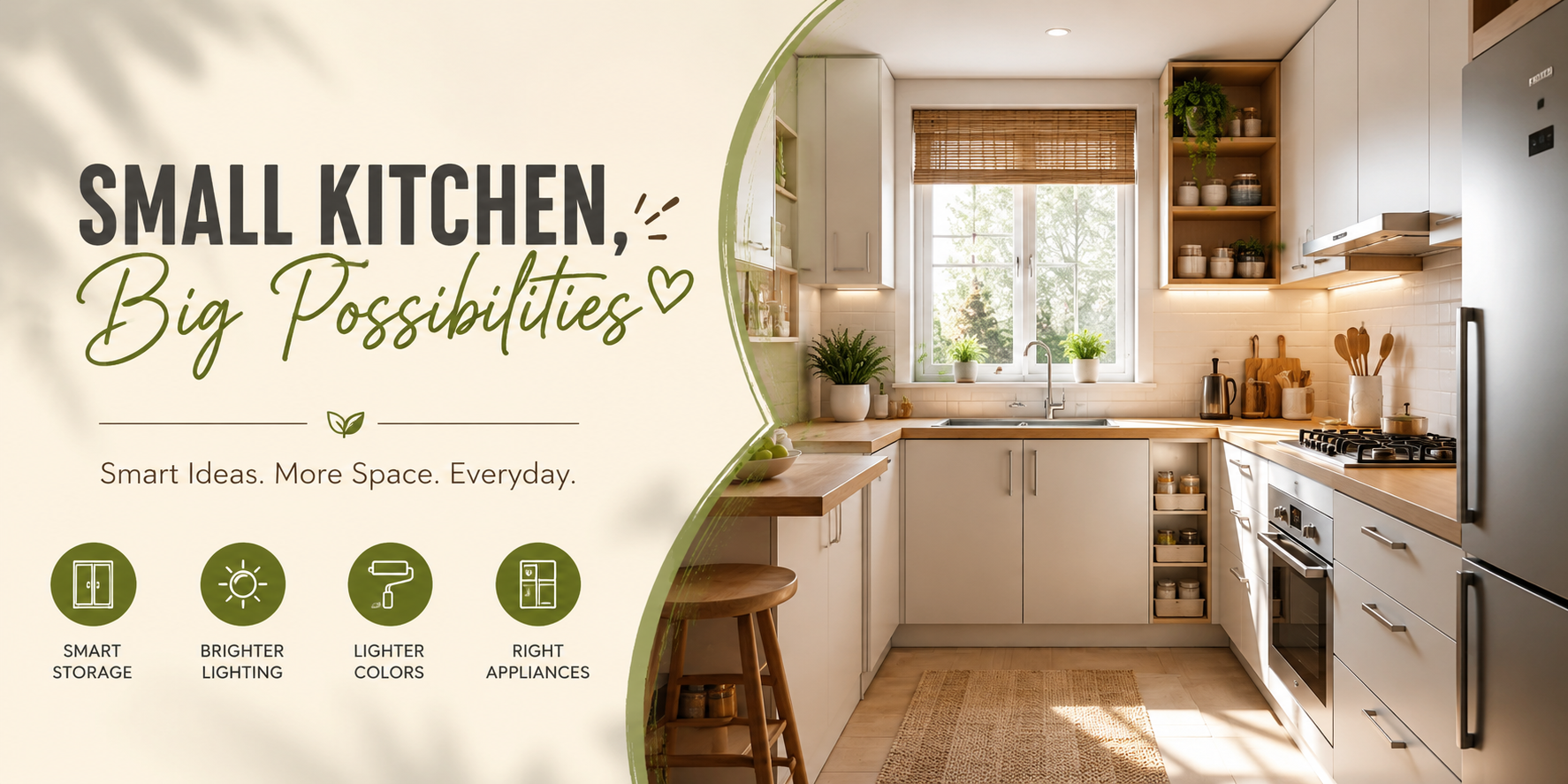






A cluttered kitchen does not always need more cabinets. Often, the biggest improvement comes from decluttering, using vertical space, improving cabinet organization, and giving everyday items a logical place to live.
The best kitchen organization hacks help you make the most of the storage you already have. Cabinet doors, deep drawers, awkward corners, narrow gaps, and the space under the sink can all become useful storage areas.
Whether you have a large kitchen, a small apartment kitchen, or a rental with limited storage, these practical kitchen storage ideas can help you create a cleaner, more functional space.
What is the fastest way to organize a kitchen?
The fastest way to organize a kitchen is to declutter before adding storage solutions. Remove expired food, duplicates, broken items, and kitchen gadgets you rarely use. Then group what remains by function and frequency of use, keeping everyday essentials in the easiest-to-reach locations.
Recent kitchen-organization guidance similarly emphasizes starting with the items you use most and removing unnecessary clutter before adding storage products.
Start with a quick kitchen decluttering session
- Clear the countertops.
- Throw away obvious trash and spoiled food.
- Remove duplicate utensils, gadgets, and containers.
- Group similar items together.
- Put frequently used items within easy reach.
- Move rarely used items to higher or less convenient storage.
- Set aside useful items you no longer need for donation.
Important: Don’t buy organizers first. Measure and assess your storage needs after decluttering.
1. Use vertical space inside kitchen cabinets
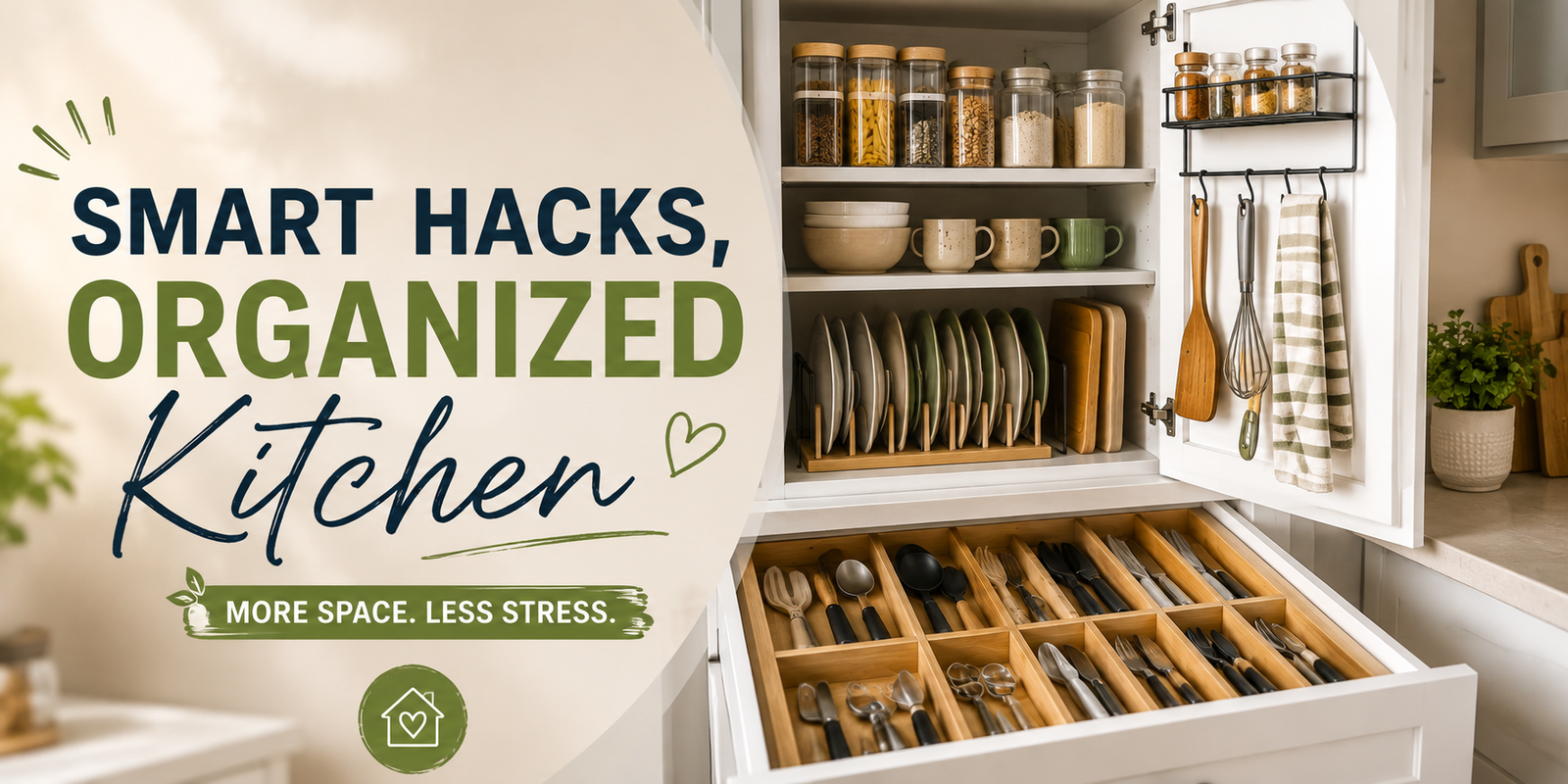
One of the easiest ways to increase kitchen cabinet storage is to use the space above and below existing shelves.
Instead of stacking everything into one tall pile, use shelf risers, under-shelf baskets, and vertical dividers to create additional storage levels.
These solutions can work well for:
- Plates and bowls
- Mugs
- Cutting boards
- Baking sheets
- Serving dishes
- Small kitchen appliances
The goal is not simply to fit more items into a cabinet. Good kitchen organization should also make items easier to see and reach.
If an organizer creates another layer that blocks everything behind it, it may actually make the cabinet less functional.
2. Turn cabinet doors into extra storage
The inside of a cabinet door is often wasted space.
A slim door-mounted organizer can hold lightweight items such as:
- Measuring spoons
- Food-storage bags
- Small kitchen tools
- Cleaning supplies
- Kitchen towels
Choose an organizer that fits the cabinet and is appropriate for the weight of the items you plan to store. Avoid putting heavy objects on adhesive storage systems unless the product is specifically designed for that load.
Space-saving tip: Keep bulky items inside the cabinet and use the door for thin, lightweight items.
3. Organize deep kitchen drawers by function
Deep drawers can quickly become cluttered when utensils are thrown together.
Instead, divide drawers into practical zones. Use adjustable drawer dividers or modular organizers to keep similar tools together.
For example:
Cooking drawer
- Spatulas
- Tongs
- Wooden spoons
- Whisks
Food-prep drawer
- Measuring cups
- Measuring spoons
- Peelers
- Graters
Food-storage drawer
- Reusable bags
- Clips
- Container lids
This approach makes kitchen drawer organization easier to maintain because every category has a defined place.
4. Store pot and pan lids vertically
Pots and pans are bulky enough, but their lids can make cabinet organization even harder.
Instead of stacking lids randomly, store them vertically with a dedicated lid organizer. If you have a deep drawer, vertical storage can also make individual lids easier to remove.
You can nest compatible pots and pans together while keeping lids in a separate, accessible location.
Best practice: Organize cookware according to how often you use it, not simply by size or appearance.
5. Create simple pantry organization zones
A well-organized pantry makes it easier to find food and see what you already have.
Group pantry staples into broad categories such as:
- Breakfast foods
- Pasta and grains
- Baking ingredients
- Snacks
- Canned foods
- Spices and seasonings
- Cooking oils and sauces
- Backstock
Use pantry bins selectively. They are particularly useful for small packages, snack packets, and items that tend to get lost on deep shelves.
Clear containers can improve visibility, but you do not need to transfer every food into matching containers. Original packaging can be more practical when you need to check expiration dates, cooking instructions, or allergen information.
6. Make refrigerator organization work harder
Better refrigerator organization can make food easier to find and help you notice leftovers and ingredients before they are forgotten.
Create simple refrigerator zones for:
- Ready-to-eat foods
- Dairy
- Produce
- Drinks
- Sauces and condiments
- Foods that should be used soon
A small “eat first” container can help make leftovers and foods approaching the end of their useful storage period more visible.
For food safety, the FDA recommends keeping the refrigerator at 40°F (4°C) or below. FDA guidance also recommends using refrigerated leftovers within three to four days.
Helpful resource: FDA food-safety guidance
7. Use a lazy Susan in awkward kitchen cabinets
Corner cabinets and deep shelves can waste valuable storage space because items at the back are difficult to reach.
A lazy Susan or rotating organizer can make smaller items easier to access.
They can work especially well for:
- Sauces
- Condiments
- Spices
- Bottles
- Small pantry items
Before installing one, make sure it can rotate freely without hitting cabinet walls or doors.
8. Organize the space under the kitchen sink
The cabinet under the sink is often difficult to organize because of pipes and plumbing.
Create separate zones for:
Dishwashing: Dish soap, dishwasher supplies, sponges
Cleaning: Frequently used cleaning products
Backstock: Refills and extra supplies
An adjustable shelf, pull-out organizer, or small bin can make the space easier to access.
Keep cleaning products separate from food, cookware, and food-storage equipment.
9. Add a rolling kitchen cart
A slim rolling cart is one of the most flexible small kitchen storage ideas.
Depending on your needs, use one for:
- Pantry overflow
- Coffee and tea
- Baking supplies
- Produce
- Lunch supplies
- Small appliances
Because the cart can move, it is particularly useful in apartments and other kitchens where permanent remodeling is not practical.
Current small-kitchen storage coverage continues to highlight narrow rolling carts and other compact solutions for making use of overlooked spaces.
10. Keep frequently used kitchen items at eye level
Not every kitchen item deserves prime storage space.
Keep everyday cookware, dishes, utensils, and ingredients in the easiest-to-reach areas. Move seasonal serving pieces, specialty appliances, and rarely used cookware to higher or less convenient cabinets.
Think of your kitchen storage in three levels:
- Easy access: Items used every day
- Moderate access: Items used weekly
- Less convenient storage: Seasonal and occasional items
This simple system can also help reduce countertop clutter.
11. Create countertop storage zones
A clean countertop is easier to maintain when the things that belong there have defined homes.
For example:
Coffee station: Coffee maker, beans, mugs
Prep station: Cutting board and everyday prep tools
Cooking station: Frequently used oils and seasonings
Cleaning station: Dish soap and sponge
You do not have to hide every appliance. If you use an appliance every day, leaving it accessible may be more practical.
The goal is functional kitchen organization, not an empty countertop at all costs.
12. Store cutting boards and baking sheets vertically
Flat kitchen items take up less usable cabinet space when they are stored upright.
Use a sturdy divider or rack for:
- Cutting boards
- Baking sheets
- Cooling racks
- Muffin tins
- Serving trays
Vertical storage also lets you remove one item without disturbing an entire stack.
This is one of the simplest kitchen cabinet organization ideas for creating better access without remodeling.
13. Organize food-storage containers and lids
Food-storage containers can quickly take over an entire cabinet.
Start by removing:
- Broken containers
- Containers without useful lids
- Unmatched pieces you never use
- Excess duplicates
Nest containers by size and store lids vertically in a separate divider or bin.
You do not need dozens of containers. A smaller, consistent collection is often much easier to organize and maintain.
14. Use magnetic kitchen storage strategically
Magnetic storage can free up valuable drawer and countertop space.
Depending on the product and installation method, magnetic systems can hold:
- Measuring spoons
- Small metal utensils
- Kitchen shears
- Frequently used tools
Check the manufacturer’s weight rating before hanging anything substantial.
For knives or other sharp tools, prioritize secure installation and safe placement, especially in homes with children.
15. Reclaim narrow spaces
Look around your kitchen for narrow gaps that are currently unused.
Possible locations include the space:
- Between a refrigerator and wall
- Beside cabinets
- Between appliances
- Near a pantry
A slim rolling organizer can turn these gaps into storage for bottles, spices, canned goods, or pantry supplies.
Always measure first. Check width, depth, height, door clearance, handles, baseboards, and appliance requirements before purchasing a storage unit.
16. Declutter kitchen gadgets you rarely use
Sometimes the biggest kitchen storage problem is simply having too many things.
Ask yourself:
- Have I used this recently?
- Does another tool perform the same job?
- Would I replace it if it disappeared?
You do not need to pursue extreme minimalism. The goal is to keep the kitchen tools that genuinely earn their storage space.
Current small-kitchen organization advice also emphasizes taking inventory, removing duplicates, discarding broken items, and grouping possessions before deciding how to store them.
17. Create an “eat first” area
Designate a small, highly visible area in your refrigerator or pantry for foods that should be used soon.
This can include:
- Leftovers
- Opened ingredients
- Produce approaching the end of its useful life
- Partially used foods
The system helps you see what needs attention before buying more food.
Remember that organization does not replace food-safety guidance. Follow recommended refrigeration temperatures and storage times for perishable foods.
Internal linking opportunity: Link to a related article such as “How to Organize Your Refrigerator to Reduce Food Waste.”
18. Label only what needs labeling
Labels can make pantry organization easier, especially when containers look similar.
They work particularly well for:
- Bulk ingredients
- Storage bins
- Freezer meals
- Similar-looking pantry items
- Household supplies
But labeling every object can create unnecessary maintenance.
A useful label should answer one question quickly:
“What belongs here?”
19. Give every kitchen category a storage limit
One of the best long-term home organization ideas is to give each category a physical limit.
For example:
- One drawer for food-storage accessories
- One shelf for travel mugs
- One bin for baking decorations
- One designated area for reusable bags
Once that space is full, something needs to be removed before another item comes in.
This prevents the cycle of constantly buying more storage for an ever-growing collection of things.
20. Organize the freezer by category
A disorganized freezer makes it easy to forget what you already own.
Group frozen foods into broad categories and use bins or containers when they make items easier to find.
Label prepared foods with the name and date, and rotate older items forward when practical.
Freezing is an effective way to preserve many foods, but recommended storage times vary by food and are often based on quality rather than safety. Use reliable food-safety guidance for specific items.
What are the best kitchen storage solutions?
The best kitchen organizers solve a specific storage problem rather than simply adding more containers.
|
Kitchen storage problem |
Useful organization solution |
|
Unused vertical cabinet space |
Shelf riser |
|
Deep, cluttered shelves |
Pull-out bin |
|
Pot-lid clutter |
Vertical lid organizer |
|
Awkward corner cabinet |
Lazy Susan |
|
Narrow gap |
Slim rolling cart |
|
Messy utensil drawer |
Adjustable dividers |
|
Stacked baking sheets |
Vertical rack |
|
Small pantry packages |
Open bins |
|
Under-sink clutter |
Pull-out organizer |
|
Food-container lids |
Lid divider |
Best tip: Measure your cabinets, drawers, and gaps before buying organizers.
How do you organize a very small kitchen?
To organize a small kitchen, focus on vertical storage, unused gaps, cabinet-door storage, multifunctional organizers, and aggressive decluttering. Keep everyday items close to the areas where you use them and move rarely used items out of prime storage positions.
Small kitchens do not necessarily need fewer functions. They need a storage system that makes limited space easier to use.
Try the “one move away” test
For frequently used items, ask:
Can I take this out and put it away in one simple movement?
If you have to remove several other objects first, the storage location is probably inefficient.
For example, if using your everyday frying pan requires moving three other pans, the system will eventually encourage countertop clutter.
What should you avoid when organizing a kitchen?
Avoid buying storage containers before decluttering, filling every available surface, creating unstable stacks, and putting frequently used items in inconvenient locations.
Also avoid organizing purely for appearance.
A kitchen can look perfectly styled and still be frustrating to use.
The best kitchen organization system balances:
- Storage capacity
- Accessibility
- Visibility
- Safety
- Ease of maintenance
How do you keep a kitchen organized?
The easiest way to maintain an organized kitchen is to create a simple reset routine and give every frequently used category a permanent home.
Daily
- Return items to their storage zones.
- Clear unnecessary countertop clutter.
- Put dishes and cookware away.
Weekly
- Check the refrigerator.
- Move foods that need to be used soon into a visible area.
- Clean problem areas as needed.
Monthly
- Review pantry items.
- Check food-storage containers.
- Remove duplicates.
- Fix recurring clutter zones.
Seasonally
- Rotate seasonal cookware.
- Move occasional serving pieces.
- Review specialty appliances and tools.
The goal is not a kitchen that stays perfect. The goal is a kitchen that is easy to reset.
Frequently Asked Questions About Kitchen Organization
How can I maximize kitchen storage without remodeling?
Use existing space more efficiently. Add vertical shelf storage, cabinet-door organizers, drawer dividers, vertical cookware storage, under-sink organizers, and narrow carts where appropriate. Before buying anything, remove duplicates and unused items.
What is the best way to organize kitchen cabinets?
Group items by function and frequency of use. Keep everyday dishes, cookware, and ingredients in accessible locations and move rarely used items to higher or less convenient shelves. Shelf risers and vertical dividers can improve storage when they do not obstruct access.
How do I organize a small kitchen with limited cabinets?
Start by decluttering, then use vertical space, cabinet doors, narrow gaps, and flexible storage such as a rolling cart. Keep countertops limited to appliances and tools you use regularly.
How do I organize a cluttered pantry?
Remove expired food and duplicates first. Then group foods into broad categories such as snacks, baking supplies, grains, canned foods, and breakfast items. Use bins selectively for small packages or deep shelves.
How do I organize kitchen drawers?
Group utensils according to function and use adjustable dividers to prevent them from shifting. Keep everyday tools easy to reach and avoid filling drawers so tightly that retrieving one item disrupts everything else.
Are clear pantry containers worth it?
They can improve visibility and make certain pantry categories easier to manage, but they are optional. Original packaging may be better when you need easy access to expiration dates, allergen information, preparation instructions, or storage directions.
How can I keep my kitchen organized?
Give every frequently used category a designated home and establish a maximum amount of storage space for it. When the space becomes full, remove something before adding another item. A short daily reset and regular pantry and refrigerator checks can prevent clutter from returning.
Can kitchen organization help reduce food waste?
Yes. Better visibility can make forgotten ingredients, leftovers, and foods approaching the end of their useful storage period easier to notice. An “eat first” refrigerator zone can help you prioritize foods that need attention.
Final Takeaway: Make Your Kitchen Work Smarter
The best kitchen organization hacks do not require a complete kitchen remodel or expensive storage products.
Start by decluttering. Then make better use of vertical cabinet space, cabinet doors, deep drawers, narrow gaps, awkward corners, refrigerator zones, and under-sink storage.
Most importantly, organize around how you actually cook and use your kitchen.
When everyday items are visible, accessible, and easy to put away, your kitchen can feel significantly more spacious—even when the physical size of the room has not changed.