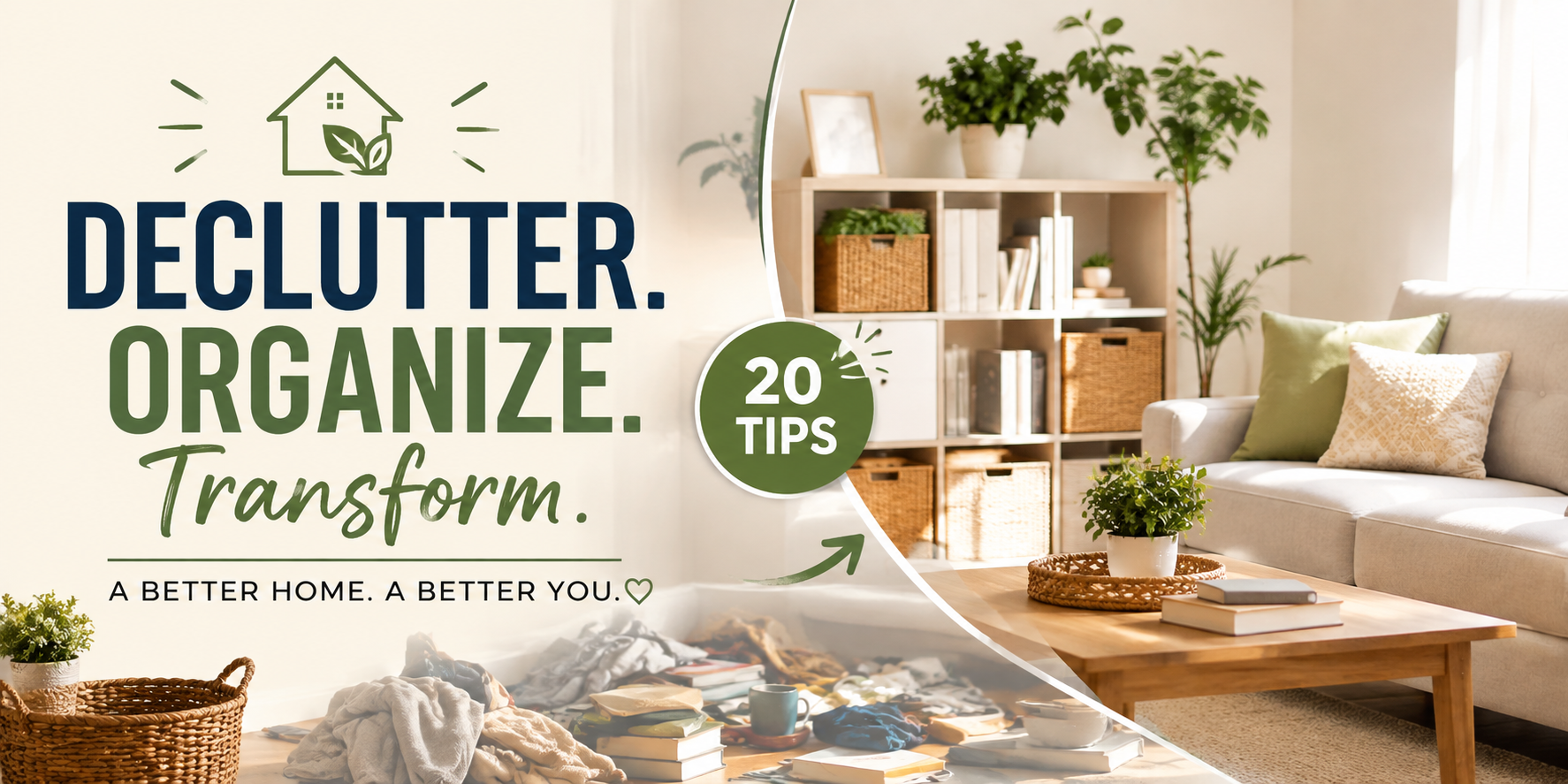

If your home constantly seems to return to clutter five minutes after you tidy it, the problem may not be that you need more storage. Often, you need a better home organization system—one that matches how you actually live.
The best home organization ideas make everyday actions easier: putting things away, finding what you need, getting out the door, cooking dinner, doing laundry, and resetting a room at the end of the day.
And in 2026, organization is increasingly shifting away from picture-perfect minimalism toward intentional ownership, flexible storage, activity-based zones, and systems built around daily routines.
Here are the ideas worth trying first.
What is the easiest way to organize your home?
The easiest approach is to declutter before buying storage, then give frequently used items a convenient home near where they are used. Start with one high-traffic area, sort what you already own, create simple zones, and choose containers only after you know what needs to be stored. This prevents you from organizing clutter instead of eliminating it.
1. Give Everything a “Home”
One of the simplest organizing rules is also one of the most effective: every frequently used item should have a designated place.
That doesn’t mean every object needs a perfectly labeled container. It means you should be able to answer, “Where does this go?” without thinking.
Try creating homes for:
- Keys
- Chargers
- Shoes
- Bags
- Cleaning supplies
- Remote controls
- Toys
- Important documents
- Everyday kitchen tools
If an item repeatedly lands on the dining table, kitchen counter, or floor, that’s useful information. The item probably needs a more convenient storage location.
Internal link opportunity: How to Create a Home for Everything
2. Organize by Activity, Not Just by Category
Traditional organization often groups similar objects together. A better approach for busy households is sometimes to organize around what you do.
For example, create:
- A coffee station with mugs, coffee, filters, and sweeteners
- A homework zone with school supplies and charging cables
- A breakfast zone with cereal, bowls, and frequently used utensils
- A laundry station with detergent, stain remover, and laundry bags
- An entryway drop zone for shoes, keys, bags, and outdoor accessories
This is sometimes called zone-based organization. The principle is simple: keep the things needed for a task together and as close as practical to where that task happens.
This approach is increasingly reflected in 2026 organization trends, which emphasize systems designed around routines and behavior rather than simply arranging possessions by room.
3. Stop Buying Storage Before You Declutter
This is one of the most important home organization tips.
Storage containers can make a mess look better temporarily, but they don’t solve the problem of owning too much.
Before buying baskets, bins, drawer dividers, or closet organizers:
- Remove everything from the area you are organizing.
- Group similar items together.
- Remove obvious trash and duplicates.
- Decide what you actually use.
- Donate, recycle, sell, or responsibly dispose of what no longer belongs.
- Measure the remaining items and available space.
- Buy storage that solves the specific problem.
The goal is less stuff plus better systems, not simply more containers.
4. Use the 90/90 Rule for “Maybe” Items
Struggling with something you haven’t used in ages?
Try asking:
Have I used this in the last 90 days? Will I realistically use it in the next 90 days?
If the answer is no to both, consider whether you actually need to keep it.
The 90/90 approach is a useful decision-making prompt, not a universal law. Seasonal clothing, emergency supplies, important documents, sentimental belongings, and specialized equipment may legitimately sit unused for longer periods.
For especially difficult decisions, put the item in a clearly defined “decide later” box with a review date rather than allowing indecision to spread into a permanent pile.
5. Turn the Entryway Into a Drop Zone
The entryway is one of the highest-impact places to organize because it controls what enters the rest of your home.
Create a dedicated landing zone for:
- Keys
- Shoes
- Handbags and backpacks
- Jackets
- Sunglasses
- Umbrellas
- Reusable shopping bags
A small home might need only a wall-mounted hook rail, narrow shoe cabinet, tray, and basket.
The goal isn’t to make your entryway look like a showroom. It’s to make the right action the easiest action.
If you always drop your keys on the same table, put a small tray there instead of fighting the habit.
6. Make Your Kitchen Work in Zones
A well-organized kitchen should reduce unnecessary movement.
Consider creating zones such as:
Prep zone: cutting boards, knives, mixing bowls and measuring tools.
Cooking zone: pots, pans, utensils and frequently used spices.
Coffee or beverage zone: mugs, coffee or tea supplies, filters and accessories.
Food-storage zone: pantry staples, containers and wraps.
Cleaning zone: dish soap, sponges, dishwasher supplies and towels.
Store the items you use most frequently at the easiest-to-reach height. Less-used appliances can move into higher cabinets or deeper storage.
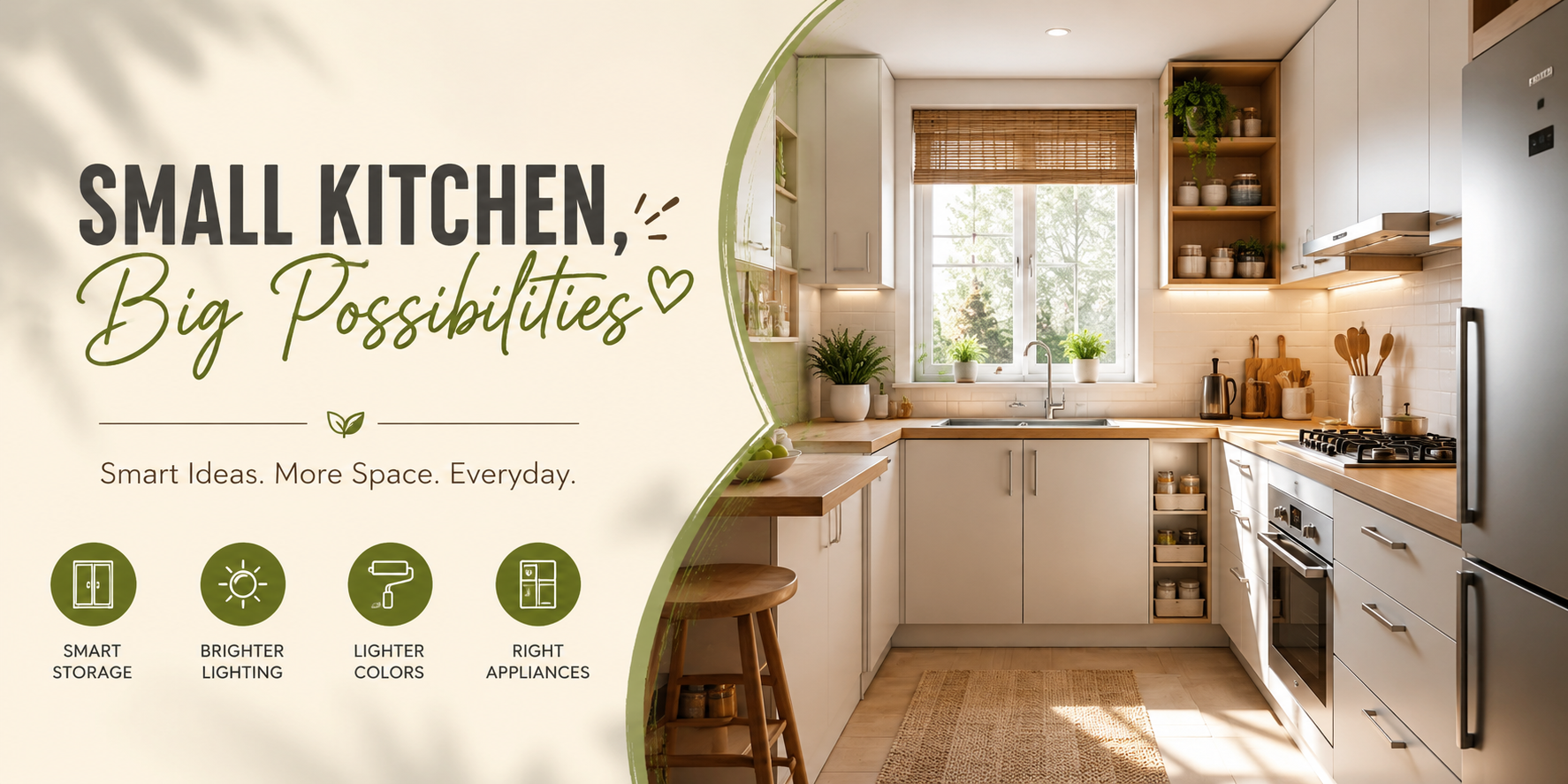
For small kitchens, vertical storage, drawer dividers, shelf risers and cabinet-door storage can make existing space work harder without requiring a remodel.
Internal link opportunity: Small Kitchen Organization Ideas That Maximize Every Cabinet
7. Create a “Daily Use” Zone in Your Closet
A closet becomes easier to maintain when your most-used clothing is easiest to access.
Try separating clothing into:
- Everyday essentials
- Workwear
- Occasion wear
- Seasonal pieces
- Exercise clothing
- Accessories
Within each category, arrange items in a way that makes sense to you—by color, frequency of use, clothing type, or outfit.
You don’t need to create a boutique-style closet. Visibility and accessibility matter more than aesthetics.
If you repeatedly forget that you own something because it’s buried behind other items, your storage system isn’t working.
8. Use Vertical Space Before Adding More Furniture
When floor space is limited, look upward.
Useful vertical home storage ideas include:
- Tall bookcases
- Wall-mounted shelves
- Pegboards
- Over-the-door organizers
- Tall pantry shelving
- Hooks
- Wall rails
- Stackable drawers
- High cabinets
Vertical storage is particularly useful in apartments and small rooms because it can increase usable storage without consuming additional floor area.
Just keep frequently used items within comfortable reach and avoid creating precarious stacks.
9. Use Clear Containers for Items You Forget About
Opaque storage can hide clutter rather than solve it.
Clear bins are particularly useful for:
- Craft supplies
- Holiday decorations
- Spare household supplies
- Small toys
- Cables and electronics accessories
- Seasonal accessories
For visually sensitive areas, woven baskets or closed cabinets may be better.
The rule is simple: visibility should match frequency of use.
Keep everyday essentials visible or easily accessible. Hide visually distracting items that you use less often.
10. Make “One In, One Out” Your Maintenance Rule
The one-in, one-out rule is a simple way to control accumulation.
When you buy a new:
- Shirt → consider removing an old shirt
- Mug → let go of a rarely used mug
- Toy → review toys that have been outgrown
- Kitchen gadget → reconsider a single-purpose tool
- Storage container → ask what existing item it is replacing
This works especially well for categories that tend to multiply quickly.
It isn’t about owning as little as possible. It’s about keeping possessions proportional to the space available.
11. Create a “Clutter Basket” for Fast Resets
If putting everything away immediately isn’t realistic, designate one attractive basket for items that belong elsewhere.
During your evening reset, walk through the house and return those items to their proper homes.
This prevents small misplaced objects from becoming multiple piles across several rooms.
Important: the basket should be a temporary transport system—not a permanent storage category.
If it becomes full every day, that is a sign that the underlying storage locations may be inconvenient.
12. Organize the Bathroom Around Your Routine
Instead of storing everything according to product type, try organizing around when you use it.
Create an:
AM routine zone: toothbrush, skincare, hair products and other morning essentials.
PM routine zone: cleanser, moisturizer, medications or other nighttime items where appropriate.
Backup zone: unopened toiletries and extra supplies.
Cleaning zone: bathroom cleaning products stored safely and separately from personal-care items.
A small tray can keep daily products together without requiring a large countertop organizer.
13. Give Paper a Three-Step System
Paper clutter becomes overwhelming when every document requires a new decision.
Use three basic destinations:
Act: Something requires action.
File: Something important needs to be retained.
Recycle/shred: It no longer needs to exist in physical form.
Deal with incoming paper regularly rather than allowing it to accumulate.
For sensitive documents, use an appropriate secure disposal method rather than putting them intact into ordinary recycling.
Internal link opportunity: How to Organize Important Documents at Home
14. Make the Most of Under-Bed Storage
The space beneath your bed is valuable real estate in a small home.
Use it for items you don’t need every day, such as:
- Seasonal clothing
- Extra bedding
- Luggage
- Holiday decorations
- Keepsakes
Use containers with lids to protect contents from dust and make retrieval easier.
Avoid turning under-bed storage into a “miscellaneous” category. Label containers according to their actual contents.
15. Use the Inside of Cabinet Doors
The inside of a cabinet door is often overlooked storage space.
Depending on the cabinet, you can use it for:
- Measuring spoons
- Cleaning tools
- Pot lids
- Hair accessories
- Foil and wraps
- Small pantry supplies
- Frequently used kitchen tools
Before installing anything, check the door’s clearance and the cabinet’s hinges. A storage solution that prevents the door from closing is not an organization solution.
16. Create a Charging Station
Random charging cables are a classic source of visual clutter.
Create one dedicated charging area with:
- A power strip or charging hub
- Clearly assigned cables
- Small cable labels
- A tray or cable-management box
- Space for the devices that charge there
Don’t keep every mystery cable you have ever encountered.
For unidentified cables, use a temporary review box. If you cannot identify or reasonably use them after a defined period, recycle them through an appropriate electronics-recycling program.
17. Make Laundry Storage Match the Workflow
Instead of organizing the laundry room purely by product category, follow the sequence of the task:
Dirty → Sort → Wash → Dry → Fold → Put Away
Keep laundry baskets near where clothes accumulate.
Store detergent and treatment products close to the washing area, following product safety instructions. Keep clean laundry supplies separate from unnecessary miscellaneous items.
A folding surface can also make the room more functional if space permits.
The best laundry room organization is the one that reduces the number of steps between washing clothes and putting them away.
18. Use Labels to Help the Whole Household
Labels aren’t just decorative.
They can make shared storage systems easier to understand, especially for:
- Kids’ toys
- Pantry shelves
- Linen closets
- Craft supplies
- Cleaning products
- Garage storage
- Seasonal decorations
Use labels that describe what belongs there in plain language.
Instead of “Miscellaneous,” use “Batteries & Small Electronics” or “Gift-Wrapping Supplies.”
A good label reduces decision-making.
19. Give Kids Easy-to-Reach Storage
If children are expected to put things away, the storage should be designed for them.
Use:
- Low shelves
- Open bins
- Picture labels for younger children
- Easy-access hooks
- Clearly separated categories
Avoid creating a system that requires an adult to retrieve and return every toy.
The objective isn’t perfect tidiness. It’s making independent cleanup possible.
20. Organize Your Home Office for “Action First”
Your home office can quickly become a storage area for unfinished decisions.
Keep the desktop primarily for current work.
Create separate locations for:
- Current projects
- Incoming paperwork
- Documents to file
- Office supplies
- Technology accessories
- Archived records
Digitize or dispose of documents when appropriate, while retaining records you genuinely need.
For important financial, tax, legal, employment, or identity documents, follow the relevant retention and security requirements rather than applying a generic decluttering rule.
21. Use Multi-Functional Furniture in Small Spaces
When square footage is limited, furniture can perform more than one job.
Useful options include:
- Ottomans with hidden storage
- Beds with drawers
- Benches with compartments
- Foldable desks
- Nesting tables
- Storage benches
- Wall-mounted desks
Multifunctional furniture is especially useful in apartments and multipurpose rooms because it adds storage without necessarily adding another standalone piece of furniture.
22. Create a “Leaving the House” Station
If mornings are chaotic, organize around the moment you leave.
Put frequently needed items together:
- Keys
- Wallet
- Bag
- Shoes
- Sunglasses
- Work badge
- Umbrella
- Reusable bottle
This is an example of routine-based organization: instead of asking where an object traditionally belongs, you ask where you naturally need it.
That small change can eliminate a surprising amount of daily searching.
23. Use a 10-Minute Evening Reset
You don’t need to spend an hour cleaning every night.
Set a short timer and focus only on high-impact tasks:
- Return misplaced items.
- Clear the kitchen counter.
- Reset the living room.
- Put shoes and bags away.
- Deal with obvious trash.
- Prepare anything needed for tomorrow.
Stop when the timer ends.
The purpose is maintenance, not perfection.
Breaking large organizing jobs into smaller actions can also make them feel more manageable; current organizing advice increasingly emphasizes sustainable systems over one-time, all-or-nothing decluttering projects.
24. Build Storage Around Your Actual Habits
This may be the most important idea on the list.
If everyone in your home ignores the coat closet and drops jackets on a chair, don’t simply insist that the closet be used.
Ask why.
Maybe hooks near the door would work better.
If clean laundry always sits in a basket for three days, perhaps the closet is too far away or difficult to use.
A successful organization system works with real behavior rather than fighting it.
Professional organizing guidance similarly emphasizes evaluating spaces, possessions, routines and desired outcomes rather than applying one universal system to every household.
25. Design a System You Can Maintain
The prettiest organization system isn’t necessarily the best one.
A useful system should be:
- Easy to understand
- Easy to access
- Easy to reset
- Proportional to the amount you own
- Adaptable as your needs change
- Simple enough for everyone who uses it
In 2026, this emphasis on flexible, intentional organization is increasingly replacing the idea that a home needs to look perfectly minimal to be considered organized.
Your home should support your life—not become another project you have to manage.
What should you declutter first?
Start with items that are easy to decide about and occupy valuable space. Good candidates include obvious trash, broken items, expired products, duplicates, unwanted freebies, clothes that no longer fit, and things you have not used in a long time. Save sentimental belongings and complicated categories for later, when your decision-making momentum is stronger.
A useful sequence is:
Trash → Duplicates → Broken items → Unused items → Difficult decisions → Sentimental items
This reduces decision fatigue and gives you visible progress quickly.
Should you declutter or organize first?
Declutter first, organize second. If you organize possessions you don’t need, you often spend money and effort creating storage for clutter. Once unnecessary items are removed, you can see what remains, identify recurring problems, measure available space, and choose storage solutions that actually fit your household.
That doesn’t mean you need to throw away everything you haven’t used recently. Seasonal, sentimental, emergency and specialized items can all have legitimate reasons for being kept.
What are the best home organization ideas for small spaces?
For a small home or apartment, prioritize solutions that use vertical, hidden and multipurpose space. Wall-mounted shelves, hooks, over-door organizers, under-bed containers, tall cabinets, drawer dividers and multifunctional furniture can increase usable storage without consuming much additional floor space.
The biggest improvement often comes from reducing the number of items that compete for limited storage.
What organization trends are actually worth trying in 2026?
The most practical 2026 trends are less about creating a perfectly styled pantry and more about making storage support everyday life. Current design coverage highlights intentional ownership, modular storage, activity-based zones, built-in or integrated storage, visibility, and systems designed around individual routines.
The trends worth keeping are the ones that save time or make a space easier to maintain—not simply the ones that look good in photographs.
Does an organized home reduce stress?
Organization may make a home feel easier to manage, but it is important not to overstate the science. Research has found associations between perceptions of a stressful home environment and patterns of cortisol in some participants, but this does not prove that decluttering alone prevents stress or improves health.
A more defensible takeaway is practical: reducing visual and logistical friction can make everyday tasks easier, while individual responses to clutter vary.
A 2026 Angi survey of 1,500 Americans found that 28% identified clutter as the household mess that caused them the most stress; because this is survey data from one organization, it should be treated as an indicator of reported experience rather than a universal measurement.
What should you do with things you no longer want?
Use the most appropriate option for the item: reuse it, give it to someone who needs it, donate it where accepted, sell it, recycle it through an appropriate program, or dispose of it responsibly.
Don’t automatically throw everything into the trash.
The U.S. Environmental Protection Agency recommends prioritizing reducing, reusing and recycling as part of reducing household waste. Local recycling and donation rules vary, so check your local program before assuming an item is recyclable or accepted for donation.
A Simple Weekend Home Organization Plan
If your entire house feels overwhelming, don’t try to organize everything at once.
Saturday morning: Declutter
Choose one high-impact area:
- Entryway
- Kitchen counter
- Bathroom
- Closet
- Living room
Remove obvious clutter and group similar items.
Saturday afternoon: Create zones
Decide where frequently used items should live based on your household’s routines.
Sunday morning: Add storage
Only now buy or repurpose containers, shelves, hooks or drawer organizers.
Sunday afternoon: Label and reset
Label shared storage where useful and remove anything that still doesn’t have a practical home.
Sunday evening: Test the system
Live with it.
If people don’t naturally use the new system, adjust the system rather than blaming the people.
The Biggest Home Organization Mistakes to Avoid
Even a beautiful organizing system can fail if you:
- Buy storage before decluttering
- Create overly complicated categories
- Put everyday items somewhere inconvenient
- Use “miscellaneous” bins for everything
- Keep too many duplicates
- Organize for appearance rather than function
- Create systems only one person understands
- Expect one major decluttering session to solve everything
- Keep buying organizers instead of changing purchasing habits
- Ignore the habits that create the clutter
Good organization is less about having the perfect container and more about creating a repeatable system.
The Bottom Line
The home organization ideas that make the biggest difference aren’t necessarily expensive or complicated.
Start by removing what you no longer need. Then give everything else a logical home, organize around your real routines, use vertical and hidden storage intelligently, and make the system easy enough for everyone in the household to maintain.
If you do only three things, make them these:
- Declutter before buying storage.
- Store things where you naturally use them.
- Create systems that are easy to reset.
That’s the difference between a home that looks organized for a day and a home that actually stays easier to live in.
Helpful Resources
- The National Association of Productivity & Organizing Professionals (NAPO) provides professional organizing education, resources and a directory for finding organizing professionals.
- The U.S. Environmental Protection Agency (EPA) provides guidance on reducing, reusing and recycling household materials.
- Research on home environments and stress is available through PubMed, including studies examining perceived home stressors and cortisol patterns.