





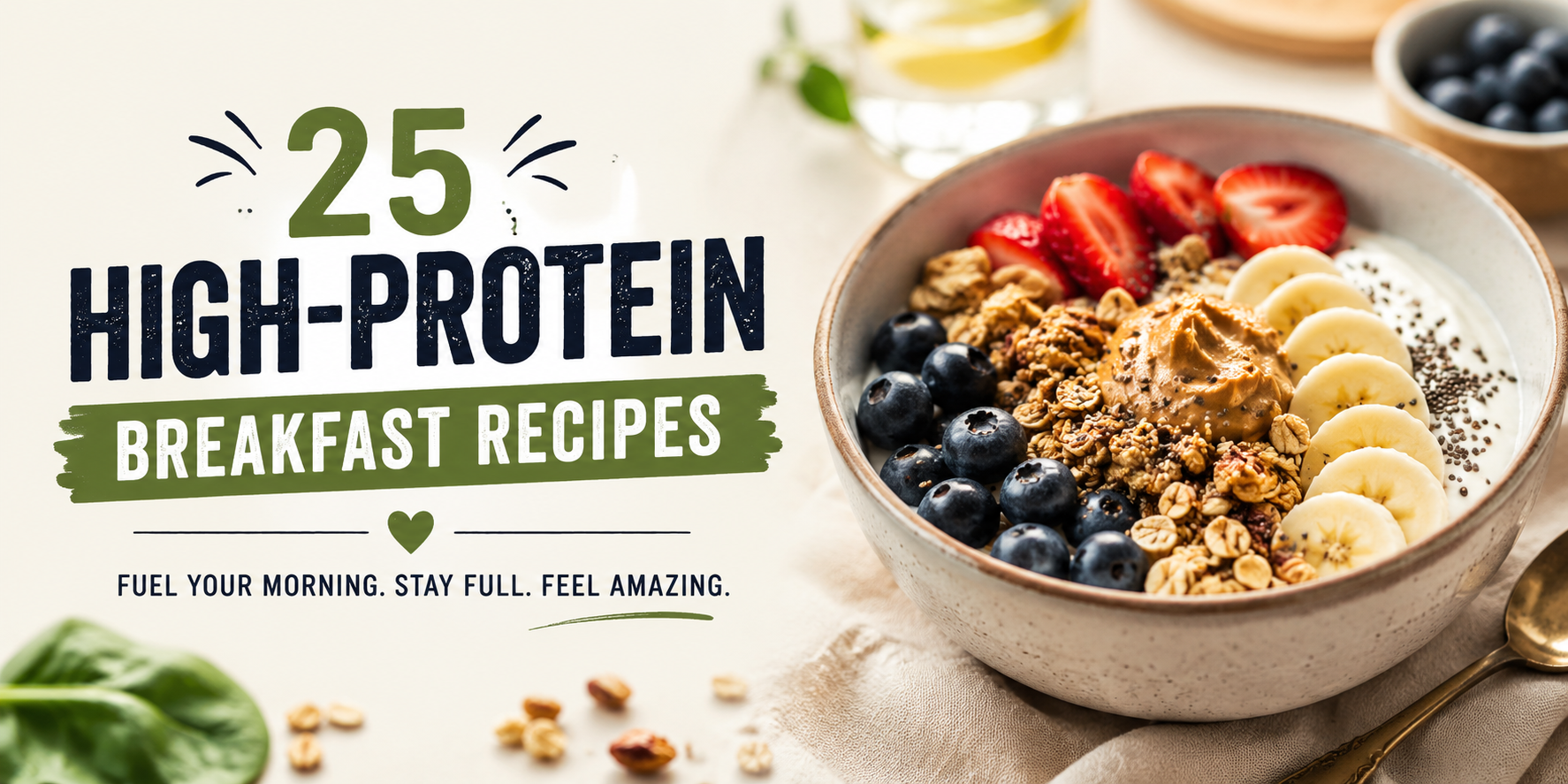
Looking for high-protein breakfast recipes that are easy, delicious, and satisfying? These 25 breakfast ideas combine protein-rich foods such as eggs, Greek yogurt, cottage cheese, tofu, beans, salmon, chicken, nuts, and seeds with fruit, vegetables, and whole grains.
From quick high-protein breakfast ideas to make-ahead overnight oats, breakfast burritos, egg bites, smoothies, and protein pancakes, there is an option for almost every morning routine.
A protein-rich breakfast can be part of a balanced eating pattern, especially when you pair protein with fiber-rich foods and healthy fats. Cleveland Clinic’s current guidance suggests that around 20–30 grams of protein at breakfast can be a practical target for many adults, although individual protein needs vary.
Why Choose a High-Protein Breakfast?
A high-protein breakfast provides an easy way to include protein early in the day. Protein foods include eggs, seafood, poultry, beans, lentils, nuts, seeds, and soy foods, according to USDA MyPlate.
For better overall nutrition, don’t focus on protein alone. Build breakfast around a combination of protein, fiber, whole grains, fruits or vegetables, and healthy fats. The American Heart Association recommends emphasizing nutrient-dense foods and healthier protein choices as part of an overall healthy eating pattern.
25 Best High-Protein Breakfast Ideas
1. Greek Yogurt Berry Protein Bowl
Best for: A quick, no-cook breakfast
Ingredients
- 1 cup plain Greek yogurt
- ½ cup strawberries or blueberries
- 1 tablespoon chia seeds
- 1 tablespoon chopped almonds
- 1 tablespoon natural peanut butter
- Cinnamon
How to Make It
Add Greek yogurt to a bowl and top with berries, chia seeds, almonds, peanut butter, and cinnamon.
Why you’ll love it: Greek yogurt creates a convenient protein base, while berries, chia seeds, and nuts add texture and complementary nutrients.
Easy upgrade: Add rolled oats for more whole-grain carbohydrates and fiber.
2. Cottage Cheese and Berry Breakfast Bowl
Best for: A fast high-protein breakfast without cooking
Ingredients
- ¾–1 cup cottage cheese
- ½ cup berries
- 1 tablespoon walnuts
- 1 teaspoon chia seeds
- Cinnamon
How to Make It
Add cottage cheese to a bowl and top with berries, walnuts, chia seeds, and cinnamon.
For a sweeter breakfast, add sliced banana or a small amount of honey.
3. High-Protein Egg and Vegetable Scramble
Best for: A savory breakfast
Ingredients
- 2 eggs
- 2–3 egg whites
- Spinach
- Bell pepper
- Mushrooms
- ¼ cup cottage cheese
- Black pepper and herbs
How to Make It
Sauté the vegetables until tender. Add the eggs and egg whites and cook until set. Fold in cottage cheese before serving.
Pair it with whole-grain toast and fresh fruit for a more balanced breakfast.
4. Cottage Cheese Protein Pancakes
Best for: A high-protein weekend breakfast
Ingredients
- ½ cup cottage cheese
- 2 eggs
- ½ cup rolled oats
- ½ teaspoon baking powder
- Cinnamon
- Fresh berries
How to Make It
Blend the cottage cheese, eggs, oats, baking powder, and cinnamon. Cook small pancakes on a lightly greased skillet until golden on both sides.
Serve with berries and Greek yogurt instead of a large amount of syrup.
5. Peanut Butter Banana Protein Overnight Oats
Best for: High-protein breakfast meal prep
Ingredients
- ½ cup rolled oats
- ¾ cup Greek yogurt
- ½ cup milk
- 1 tablespoon chia seeds
- 1 tablespoon peanut butter
- ½ banana
- Cinnamon
How to Make It
Mix the ingredients in a jar, cover, and refrigerate overnight. Add banana slices before serving.
Overnight oats are one of the easiest make-ahead high-protein breakfast ideas because the meal is ready when you wake up. Cleveland Clinic also recommends overnight oats made with rolled oats, Greek yogurt, milk, seeds, and nut butter as a protein-rich breakfast option.
6. Egg and Avocado Whole-Grain Toast
Best for: A quick healthy breakfast
Ingredients
- 1–2 slices whole-grain bread
- 2 eggs
- ½ avocado
- Tomato slices
- Chili flakes
- Black pepper
How to Make It
Toast the bread, spread with avocado, and top with cooked eggs, tomato, and seasonings.
Adding eggs to avocado toast is a simple way to turn a basic breakfast into a more protein-rich meal. Cleveland Clinic also recommends avocado toast with eggs and whole-grain bread as a high-protein breakfast combination.
7. High-Protein Breakfast Burrito
Best for: A portable breakfast
Ingredients
- 2 eggs
- ½ cup black beans
- 1 whole-grain tortilla
- Spinach
- Salsa
- ¼ cup shredded cheese
- Avocado
How to Make It
Cook the eggs and warm the beans. Layer everything inside the tortilla, roll tightly, and serve.
Beans and eggs make this a particularly practical combination. The American Heart Association also recommends adding beans to breakfast tacos, scrambled eggs, and vegetable omelets.
8. High-Protein Strawberry Smoothie
Best for: Busy mornings
Ingredients
- 1 cup milk or unsweetened soy milk
- ¾ cup Greek yogurt
- 1 cup frozen strawberries
- ½ banana
- 1 tablespoon chia seeds
- Ice
How to Make It
Blend everything until smooth and creamy.
For additional protein, Greek yogurt or an appropriate protein powder can be used. Add chia seeds, flaxseed, or oats when you want more fiber and texture.
9. Tofu Vegetable Breakfast Scramble
Best for: Vegan and plant-based breakfasts
Ingredients
- Firm or soft tofu
- Spinach
- Bell peppers
- Mushrooms
- Garlic
- Turmeric
- Black pepper
- Whole-grain toast
How to Make It
Crumble tofu into a skillet and cook with vegetables and seasonings until hot.
Tofu, beans, lentils, nuts, seeds, and other soy foods are useful plant-based protein options.
Cleveland Clinic also lists tofu and vegetable scramble as a high-protein vegan breakfast option.
10. Greek Yogurt Protein Pancakes
Best for: A fluffy breakfast
Ingredients
- Greek yogurt
- Eggs
- Rolled oats or oat flour
- Baking powder
- Cinnamon
- Berries
How to Make It
Mix the ingredients into a thick batter. Cook pancakes on a skillet over medium heat, flipping when bubbles appear.
Greek yogurt adds protein while helping create soft, tender pancakes.
11. High-Protein Egg Bites
Best for: Breakfast meal prep
Ingredients
- Eggs
- Cottage cheese
- Spinach
- Broccoli
- Bell peppers
- Feta or shredded cheese
How to Make It
Whisk the eggs and cottage cheese together. Stir in chopped vegetables, divide into muffin cups, and bake until the centers are set.
Egg bites are convenient for preparing several breakfasts at once. A dietitian-created cottage cheese egg bake is another example of a make-ahead breakfast built around eggs, cottage cheese, and vegetables.
12. Salmon and Egg Breakfast Toast
Best for: A protein-rich savory breakfast
Ingredients
- Whole-grain toast
- Smoked or cooked salmon
- 1–2 eggs
- Avocado
- Cucumber
- Lemon
- Black pepper
How to Make It
Layer avocado, salmon, cooked egg, cucumber, lemon, and pepper over toasted whole-grain bread.
Salmon provides protein along with omega-3 fatty acids. USDA MyPlate recommends varying protein choices and highlights seafood such as salmon and trout as nutrient-rich options.
13. High-Protein Chia Pudding
Best for: A make-ahead breakfast
Ingredients
- 2 tablespoons chia seeds
- ¾ cup milk
- ½ cup Greek yogurt
- Vanilla
- Berries
- Chopped nuts
How to Make It
Combine the chia seeds, milk, Greek yogurt, and vanilla. Refrigerate overnight and top with berries and nuts in the morning.
14. Black Bean and Egg Breakfast Bowl
Best for: An affordable, filling breakfast
Ingredients
- 2 eggs
- ½ cup black beans
- Brown rice or quinoa
- Salsa
- Avocado
- Spinach
How to Make It
Add warm grains, black beans, cooked eggs, vegetables, salsa, and avocado to a bowl.
It’s also a smart way to use leftover grains and vegetables.
15. High-Protein Oatmeal With Peanut Butter
Best for: A warm, comforting breakfast
Ingredients
- ½ cup rolled oats
- 1 cup milk
- ½ cup Greek yogurt
- 1 tablespoon peanut butter
- 1 tablespoon chia seeds
- Banana slices
- Cinnamon
How to Make It
Cook the oats with milk. Allow them to cool slightly, then stir in Greek yogurt. Top with peanut butter, banana, chia seeds, and cinnamon.
Using oats, yogurt, fruit, nuts, or seeds creates a more balanced breakfast than relying on sweetened cereal or flavored oatmeal alone.
16. Chicken and Egg Breakfast Wrap
Best for: A hearty savory breakfast
Ingredients
- Cooked chicken breast
- 2 eggs
- Whole-grain tortilla
- Spinach
- Tomato
- Avocado
- Salsa
How to Make It
Warm the tortilla and fill it with sliced chicken, scrambled eggs, vegetables, avocado, and salsa. Roll tightly and serve.
Leftover roasted chicken makes this recipe especially quick to prepare.
17. Quinoa Breakfast Bowl
Best for: A whole-grain breakfast
Ingredients
- 1 cup cooked quinoa
- 2 eggs
- Spinach
- Cherry tomatoes
- Avocado
- Pumpkin seeds
- Fresh herbs
How to Make It
Warm the quinoa and vegetables, then add cooked eggs, avocado, and pumpkin seeds.
Quinoa provides a different whole-grain option from traditional oatmeal and works well in both sweet and savory breakfast bowls.
18. High-Protein Apple Cinnamon Yogurt Bowl
Best for: A naturally sweet breakfast
Ingredients
- 1 cup plain Greek yogurt
- 1 apple
- 1 tablespoon walnuts
- 1 tablespoon chia seeds
- Cinnamon
- 1 tablespoon peanut butter
How to Make It
Dice the apple and combine it with Greek yogurt. Add walnuts, chia seeds, cinnamon, and peanut butter.
For extra crunch, add a small serving of unsweetened granola.
19. Cottage Cheese Egg Toast
Best for: A 5-minute breakfast
Ingredients
- Whole-grain toast
- Cottage cheese
- 1–2 eggs
- Tomato
- Herbs or everything seasoning
How to Make It
Toast the bread, spread with cottage cheese, and top with cooked eggs and tomato.
Cottage cheese and eggs are both convenient protein-rich ingredients and work especially well together for a quick savory breakfast.
20. High-Protein Breakfast Quesadilla
Best for: A family-friendly breakfast
Ingredients
- Whole-grain tortilla
- 2 eggs
- Black beans
- Shredded cheese
- Spinach
- Salsa
How to Make It
Add the cooked filling to a tortilla, fold it, and toast in a skillet until crisp and golden.
Serve with salsa and avocado.
21. Greek Yogurt and Oat Breakfast Parfait
Best for: Grab-and-go breakfasts
Ingredients
- Greek yogurt
- Rolled oats
- Berries
- Chia seeds
- Walnuts
- Cinnamon
How to Make It
Layer Greek yogurt, oats, berries, chia seeds, walnuts, and cinnamon in a jar.
The American Heart Association also recommends make-ahead yogurt parfaits using yogurt, fruit, nuts, rolled oats, and cinnamon as a practical breakfast option.
22. Savory Cottage Cheese Breakfast Bowl
Best for: People who prefer savory breakfasts
Ingredients
- Cottage cheese
- Cucumber
- Cherry tomatoes
- Avocado
- Pumpkin seeds
- Whole-grain toast
- Black pepper
How to Make It
Add cottage cheese to a bowl and top with vegetables, avocado, pumpkin seeds, and seasoning. Serve with whole-grain toast.
23. High-Protein Breakfast Sandwich
Best for: Meal prep and busy commutes
Ingredients
- Whole-grain English muffin
- 1–2 eggs
- Cottage cheese or cheese
- Turkey or chicken
- Spinach
- Tomato
How to Make It
Cook the egg, warm the filling, and assemble everything inside a toasted English muffin.
For a healthier everyday choice, prioritize lean, minimally processed proteins rather than relying heavily on bacon and sausage. The American Heart Association recommends choosing healthier protein sources and limiting processed meats.
24. Peanut Butter Protein Banana Toast
Best for: A simple breakfast with minimal preparation
Ingredients
- Whole-grain toast
- Natural peanut butter
- Banana
- Greek yogurt
- Chia or hemp seeds
How to Make It
Spread peanut butter over whole-grain toast and top with banana and seeds. Serve with Greek yogurt on the side.
25. High-Protein Breakfast Frittata
Best for: Weekend cooking and meal prep
Ingredients
- Eggs
- Cottage cheese
- Spinach
- Mushrooms
- Bell peppers
- Onion
- Feta
- Fresh herbs
How to Make It
Cook the vegetables, mix them with beaten eggs and cottage cheese, transfer to an oven-safe pan, and bake until the center is set.
Slice into portions and refrigerate for easy breakfasts throughout the week.
What Is a High-Protein Breakfast?
A high-protein breakfast is a morning meal built around one or more substantial protein sources, such as eggs, Greek yogurt, cottage cheese, tofu, beans, lentils, seafood, poultry, nuts, or seeds.
USDA MyPlate includes seafood, meat, poultry, eggs, beans, peas, lentils, nuts, seeds, and soy products in the Protein Foods Group.
For a balanced meal, pair your protein source with whole grains, fruit or vegetables, and healthy fats.
How Much Protein Should You Eat at Breakfast?
There is no single protein requirement that applies to everyone. Your overall protein needs depend on factors such as age, body size, activity level, and health status.
For practical meal planning, 20–30 grams of protein at breakfast is a useful range suggested by Cleveland Clinic for many adults.
If you have specific dietary or medical needs, your ideal protein intake may be different.
What Is the Most Filling High-Protein Breakfast?
The most satisfying breakfast varies from person to person. However, combining protein + fiber-rich carbohydrates + healthy fats creates a more balanced meal than focusing on protein alone.
Good examples include:
- Greek yogurt + berries + chia seeds
- Eggs + vegetables + whole-grain toast
- Cottage cheese + fruit + walnuts
- Eggs + black beans + avocado
- Tofu + vegetables + whole-grain toast
- Overnight oats + Greek yogurt + chia seeds
What Are the Best High-Protein Breakfasts for Weight Loss?
There is no single breakfast that automatically causes weight loss. Weight management depends on your overall eating pattern, calorie intake, activity, and individual needs.
If you’re looking for high-protein breakfast recipes for weight loss, prioritize meals that provide protein and fiber without excessive added sugar or calorie-dense toppings.
Good choices include:
- Greek yogurt with berries and chia seeds
- Egg and vegetable scramble
- Cottage cheese and fruit
- Tofu vegetable scramble
- Black bean and egg bowl
- Protein overnight oats
- Vegetable egg bites
Remember that foods such as peanut butter, nuts, cheese, avocado, oils, and granola can be nutritious but calorie-dense, so portions still matter.
What Are the Best High-Protein Breakfasts Without Eggs?
You don’t need eggs to make a protein-rich breakfast.
Try:
- Greek yogurt with berries and seeds
- Cottage cheese with fruit
- Protein overnight oats
- Greek yogurt chia pudding
- Tofu scramble
- Soy yogurt parfait
- Cottage cheese toast
- Quinoa breakfast bowls
- Greek yogurt smoothies
- Peanut butter and yogurt toast
Plant-based options include tofu, tempeh, beans, lentils, nuts, seeds, and other soy foods.
What Are the Best High-Protein Breakfasts for Meal Prep?
The best high-protein meal prep breakfasts are recipes that can be prepared ahead, portioned easily, and stored safely.
|
Breakfast |
Why It Works for Meal Prep |
|
Egg bites |
Easy individual portions |
|
Cottage cheese egg bake |
Simple to refrigerate and reheat |
|
Overnight oats |
Ready the night before |
|
Chia pudding |
Easy to prepare in jars |
|
Breakfast burritos |
Convenient to wrap and reheat |
|
Frittata |
Easy to slice into portions |
|
Greek yogurt parfaits |
Fast assembly |
|
Quinoa breakfast bowls |
Great for leftover grains |
The American Heart Association recommends practical make-ahead breakfast strategies such as preparing smoothies, keeping hard-boiled eggs available, and assembling yogurt parfaits ahead of time.
How Can You Add More Protein to Breakfast?
You don’t have to completely change your favorite breakfast recipes.
Try these easy swaps:
- Add Greek yogurt to oatmeal.
- Add cottage cheese to scrambled eggs.
- Add eggs to avocado toast.
- Use milk instead of water for oatmeal.
- Add chia or hemp seeds to yogurt.
- Add beans to breakfast tacos.
- Add tofu to vegetable scrambles.
- Add Greek yogurt to smoothies.
- Spread cottage cheese on whole-grain toast.
- Add nuts or natural nut butter to oats.
These simple changes can make familiar breakfasts more protein-rich without making them complicated.
High-Protein Breakfast Mistakes to Avoid
1. Focusing Only on Protein
Protein is important, but a balanced breakfast should also include other nutrient-rich foods.
Pair protein with fruits, vegetables, whole grains, and healthy fats.
2. Relying Too Much on Processed Protein Foods
Protein bars, processed meats, and highly sweetened protein products can be convenient, but they don’t need to replace whole or minimally processed foods.
The American Heart Association recommends choosing healthier protein sources and limiting processed meats.
3. Overlooking Added Sugar
Flavored yogurt, sweetened cereals, granola, syrups, and sugary breakfast drinks can add substantial amounts of added sugar.
Choose plain or lightly sweetened foods when practical and use fruit for natural sweetness.
4. Forgetting Fiber
Protein isn’t the only nutrient that matters for a satisfying breakfast.
Include foods such as oats, berries, vegetables, beans, whole grains, chia seeds, and other fiber-rich ingredients.
5. Assuming More Protein Is Always Better
More protein isn’t automatically better. Individual protein requirements vary, so focus on an appropriate amount within an overall balanced diet.
How to Build a Balanced High-Protein Breakfast
Use this simple high-protein breakfast formula:
1. Start With Protein
Choose eggs, Greek yogurt, cottage cheese, tofu, beans, lentils, seafood, or lean poultry.
2. Add a Fiber-Rich Carbohydrate
Choose oats, quinoa, whole-grain bread, beans, or a whole-grain tortilla.
3. Add Fruits or Vegetables
Try berries, bananas, apples, spinach, tomatoes, peppers, mushrooms, or avocado.
4. Add Healthy Fats
Use nuts, seeds, avocado, or natural nut butter in appropriate portions.
5. Adjust Portions to Your Needs
Your ideal breakfast size depends on your appetite, activity, overall diet, and personal goals.
This approach follows the broader principle of combining protein, fiber, whole grains, fruits, and vegetables for a nutrient-dense eating pattern.
Frequently Asked Questions
Is 30 grams of protein at breakfast too much?
For many healthy adults, 30 grams of protein at breakfast can be a practical amount, but there is no universal breakfast requirement. Protein needs vary by person. Cleveland Clinic currently suggests approximately 20–30 grams as a useful breakfast target for many adults.
What breakfast keeps you full until lunch?
A breakfast combining protein with fiber-rich carbohydrates and healthy fats is a practical choice. Try Greek yogurt with berries and chia, eggs with vegetables and whole-grain toast, cottage cheese with fruit and nuts, or overnight oats made with Greek yogurt.
Are eggs a good high-protein breakfast?
Yes. Eggs are a convenient protein food and can be combined with vegetables, beans, whole grains, avocado, or fruit. USDA MyPlate counts one egg as one ounce-equivalent from the Protein Foods Group.
What is a good high-protein breakfast without protein powder?
You can get protein from whole foods such as Greek yogurt, cottage cheese, eggs, milk, tofu, beans, lentils, salmon, chicken, nuts, and seeds. You don’t need protein powder to make a protein-rich breakfast.
Can a vegetarian breakfast be high in protein?
Yes. Eggs, Greek yogurt, cottage cheese, tofu, tempeh, beans, lentils, soy milk, nuts, and seeds can all contribute protein. Vegan breakfasts can focus on tofu, tempeh, beans, lentils, nuts, seeds, and other soy foods.
What is the easiest high-protein breakfast for busy mornings?
Overnight oats, Greek yogurt bowls, chia pudding, egg bites, cottage cheese bowls, and breakfast burritos are among the easiest options because they can be prepared in advance or assembled quickly.
Are high-protein breakfasts good for weight loss?
A high-protein breakfast can fit well into a weight-management eating pattern, but no individual food automatically causes weight loss. Overall calorie intake, food quality, activity, portion sizes, and individual circumstances matter.
Final Thoughts
These 25 high-protein breakfast recipes make it easier to build satisfying breakfasts without relying on complicated ingredients or elaborate cooking.
From Greek yogurt bowls and cottage cheese pancakes to egg scrambles, breakfast burritos, overnight oats, tofu scrambles, smoothies, and frittatas, you can choose recipes based on your schedule, dietary preferences, and taste.
The simplest strategy is to start with a protein-rich food, then add fiber, whole grains, fruit or vegetables, and healthy fats.
For busy mornings, prepare overnight oats, egg bites, yogurt parfaits, or breakfast burritos ahead of time. For slower mornings, try protein pancakes, a vegetable scramble, salmon toast, or a breakfast frittata.
The goal isn’t simply to eat as much protein as possible. It’s to create a balanced, nutritious breakfast that is satisfying, practical, and easy to repeat.