





You do not have to love exercise to become more active.
In fact, you do not need a gym, expensive gear, or a free hour every day. For many beginners, walking is one of the easiest ways to start exercising. It can feel less stressful than running, lifting weights, or joining a workout class.
The goal is not to make yourself love exercise.
Instead, the goal is to make walking simple enough to repeat.
This walking routine is for beginners, inactive adults, and anyone who wants to move more without following a hard workout plan.
What Is the Best Walking Routine for Beginners?
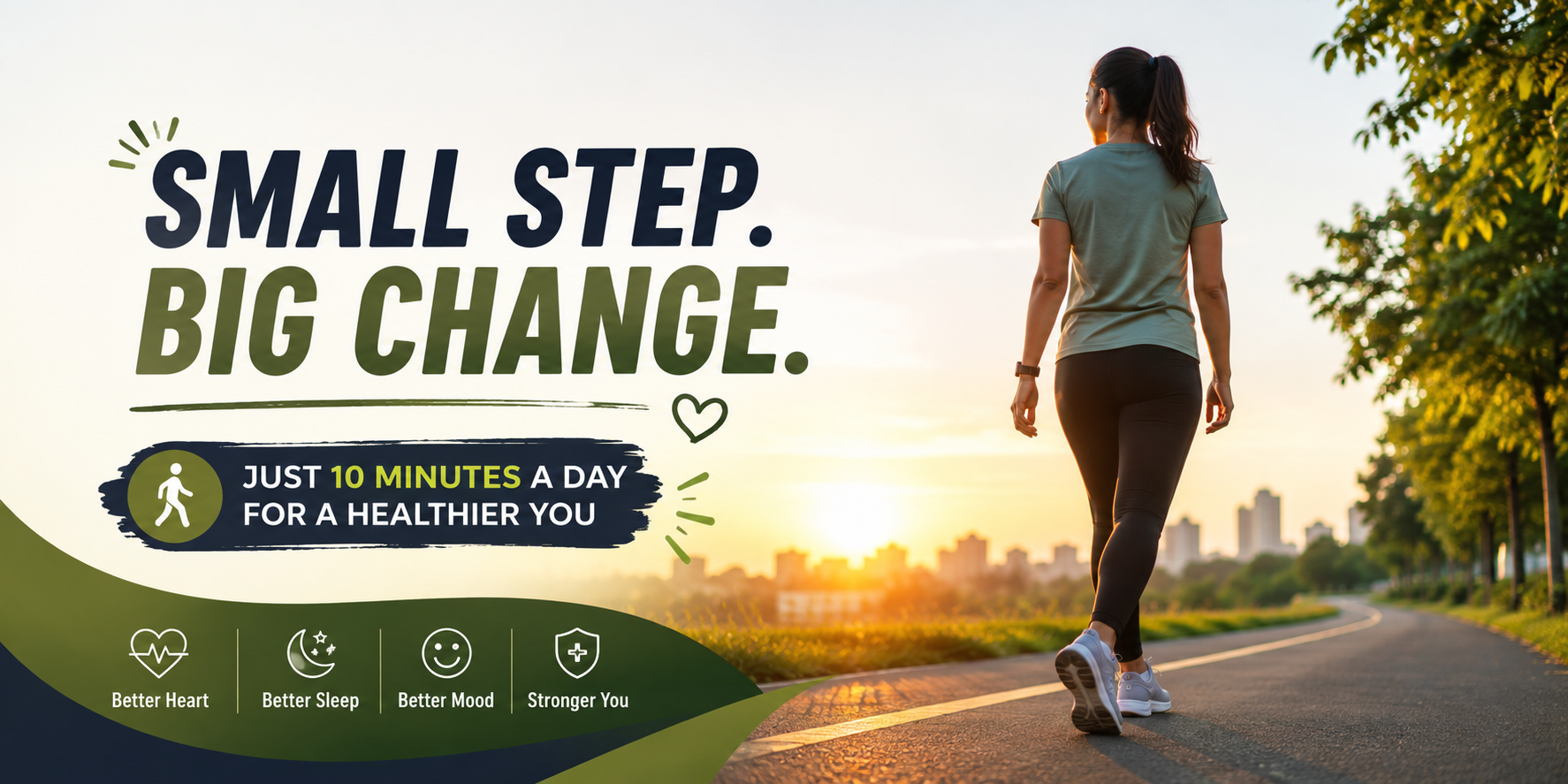
For most inactive beginners, a good place to start is a 10-minute walk three to five days a week at a comfortable pace. As walking gets easier, slowly add more time or increase your pace. Over time, work toward the general adult goal of at least 150 minutes of moderate-intensity activity each week. (CDC)
Most importantly, remember this:
You do not need to start at 150 minutes. Start with an amount you can repeat.
First, build the habit. Then, build your fitness.
Why Walking Is Good for People Who Hate Exercise
Walking removes many of the things people dislike about exercise.
For example, there are no complex moves to learn. You do not need to lift weights, run, or attend a class. Instead, you can walk outside, use a treadmill, walk around your neighborhood, visit a shopping center, or move around your home.
Also, walking can fit into your normal day.
A short walk could become:
- A morning walk before work
- A lunch break
- A walk after dinner
- A dog walk
- A phone call with a friend
- A few extra minutes of movement while running errands
Regular activity can support heart health, sleep, mental well-being, healthy aging, and overall health. In addition, public-health guidance says that some activity is better than none, especially if you are not active now. (CDC; WHO)
For that reason, walking is a useful place to begin. It may not feel effortless, but it is often easy to fit into daily life.
Try This Simple 10-Minute Walking Routine
Starting small can make exercise feel much easier. Begin with just 10 minutes.
Minutes 0–3: Walk Slowly
Start at an easy pace. Let your body warm up as you walk. Keep your steps relaxed and comfortable.
Minutes 3–8: Walk a Little Faster
Next, pick up your pace. Walk with purpose, but do not push yourself to your limit. You should feel more active without feeling exhausted.
Minutes 8–10: Slow Down
Finally, ease your pace. Spend the last two minutes walking comfortably.
That is your workout.
There is no need to walk until you are tired. Likewise, you do not need a calorie goal or a certain number of steps.
For someone who does very little activity, 10 minutes is a realistic place to begin. Both the CDC and WHO support starting with manageable amounts of activity and slowly increasing the time, number of days, and effort. (CDC; WHO)
How Fast Should You Walk?
At first, choose a pace that feels easy. Then, as your fitness improves, add more brisk walking.
A moderate-intensity walk should make your breathing and heart rate faster. One easy way to check your effort is the talk test. During moderate activity, you can usually talk, but singing becomes difficult. Brisk walking can count as moderate-intensity activity. (CDC)
However, your pace does not need to match anyone else’s. Use your own effort as your guide.
|
How walking feels |
What it means |
|
Very easy |
Good for warming up or recovery |
|
Easy |
A good starting pace |
|
Comfortable and purposeful |
Good for most beginner walks |
|
Brisk; you can talk but not sing |
Moderate intensity |
|
Very hard; talking is difficult |
Slow down |
The aim of a beginner walking plan is to create a routine you can repeat. It is not to make every walk a hard workout.
A Simple 4-Week Beginner Walking Plan
Once 10-minute walks feel manageable, slowly add more walking time.
|
Week |
Days per week | Walking time |
Main goal |
|
Week 1 |
3–5 | 10 minutes | Build consistency |
|
Week 2 |
4–5 | 12–15 minutes | Add a little time |
| Week 3 | 4–5 | 15–20 minutes |
Improve endurance |
|
Week 4 |
5 | 20–25 minutes |
Make walking a habit |
There is no need to move to the next week on schedule.
If a week feels hard, stay at that level longer. Progress should fit your needs.
The WHO recommends that inactive people start with small amounts of activity and slowly increase the time, number of days, and effort. (WHO)
After 20- to 30-minute walks feel comfortable, you can work toward the broader adult goal of at least 150 minutes of moderate-intensity aerobic activity each week. Adults should also add muscle-strengthening activities on at least two days each week. (CDC)
What If 10 Minutes of Walking Feels Too Hard?
Make the walk shorter.
For example:
- 5 minutes in the morning + 5 minutes in the evening
- 3 minutes in the morning + 4 minutes at lunch + 5 minutes after dinner
Short walks can feel easier than starting one long workout.
That matters because the best beginner exercise routine is one you can maintain.
In the same way, WHO guidance says that any amount of physical activity is better than none. Inactive people can build their activity over time. (WHO)
How Can You Make Walking Less Boring?
You may not hate movement. Maybe you simply hate being bored.
So, make your walks more enjoyable.
For instance, listen to a podcast, call a friend, play music, walk with your dog, or try a new route. You can also use your walk as quiet time after work. Another option is to save a favorite podcast or audiobook just for walking.
One simple rule can help:
Only listen to your favorite podcast while walking.
As a result, the walk has a purpose beyond exercise.
The American Heart Association also suggests using music, podcasts, friends, family, or pets to make walking more enjoyable and easier to maintain. (AHA)
Do You Need to Walk 10,000 Steps a Day?
No. You do not need to reach 10,000 steps every day to benefit from walking.
Current adult activity guidelines focus on the amount and intensity of activity. They do not require a universal 10,000-step goal. A step counter can still help you track your activity or notice changes over time. However, it does not need to control your routine. (CDC)
For beginners, tracking minutes walked and days active may be easier than chasing a large step number.
Is Walking Enough Exercise?
Walking can provide useful aerobic activity and can be a major part of a healthy exercise routine.
For adults, current guidelines recommend at least 150 minutes of moderate-intensity aerobic activity per week, or the same amount of vigorous activity. They also recommend muscle-strengthening activities on at least two days each week. (CDC)
So, walking can make up a large part of your fitness routine.
Later, you can add strength training, balance exercises, or another activity you enjoy. There is no need to add everything at once.
Walking is a perfectly reasonable place to start.
Can Walking Help You Lose Weight?
Walking can help with weight management because it increases physical activity and energy use. However, walking alone does not guarantee weight loss.
Many factors affect weight, including food intake, daily activity, sleep, age, medications, and health conditions. CDC guidance notes that healthy weight management generally includes regular physical activity and healthy eating habits. (CDC)
Therefore, avoid promises such as “walk this many minutes and lose this many pounds.”
Instead, focus on walking regularly, eating in a way that supports your goals, and watching your progress over time.
What Should You Wear for Walking?
You do not need expensive fitness gear.
Start with comfortable, supportive walking shoes that fit well. Wear clothing that suits the weather.
When walking outside, choose a safe, pedestrian-friendly route when possible. In hot, cold, wet, or dark conditions, adjust your time, clothing, route, and pace.
The American Heart Association recommends supportive footwear, weather-appropriate clothing, hydration, and attention to traffic and other safety risks. (AHA)
Do You Need to Warm Up Before a Walk?
For an easy beginner walk, you can simply start slowly.
A practical approach is:
Walk slowly → gradually increase your pace → slow down at the end.
The American Heart Association recommends several minutes of slower walking to warm up and cool down around aerobic activity. (AHA)
For a short walk, a long stretching routine is not necessary before every session.
What Should You Do When You Miss a Walking Workout?
Nothing.
One missed walk does not need to become a missed week.
There is also no need to make up for it with a hard workout. Simply return to your next planned walk.
A beginner walking routine should be flexible enough for busy days, low-energy days, bad weather, and normal life.
Consistency matters more than perfection.
What If Walking Causes Pain?
Do not automatically push through pain.
If a certain distance, pace, shoe, surface, or route keeps causing discomfort, change the factor that may be causing the problem.
People with chronic health conditions or other concerns about increasing physical activity may need personal advice from a healthcare professional. Also, take symptoms such as chest pain or dizziness during exercise seriously. (CDC)
This article provides general educational information and is not a substitute for personal medical advice.
The Easiest Walking Plan for People Who Hate Exercise
You do not need a complicated weekly schedule.
For the next seven days, try this:
|
Day |
Plan |
|
Day 1 |
10-minute easy walk |
| Day 2 |
Rest |
|
Day 3 |
10-minute walk |
| Day 4 |
Rest or a 5-minute walk |
|
Day 5 |
10-minute walk |
| Day 6 |
Optional easy walk |
|
Day 7 |
Rest |
Your goal is not to finish exhausted.
Instead, aim to finish thinking:
“I could do that again.”
That simple mindset can make it easier to build a walking habit that lasts.
The Best Walking Routine Is the One You Will Actually Follow
You do not have to become someone who loves workouts.
Instead, find a type of movement that feels manageable enough to repeat.
Start with 10 minutes. Walk at a comfortable pace. Make the experience enjoyable. Then, increase your walking time slowly. Once brisk walking feels natural, use it to work toward the recommended weekly activity level.
The goal is not to become perfect at exercise.
The goal is to make regular movement a normal part of your life.
For people who hate exercise, that may be the most sustainable fitness strategy of all.
Frequently Asked Questions About Walking for Beginners
How Long Should a Beginner Walk Each Day?
Start with about 10 minutes per walk, three to five days per week, if that feels manageable. As your fitness improves, slowly increase the duration. Over time, adults should work toward at least 150 minutes of moderate-intensity physical activity per week. (CDC)
Is a 10-Minute Walk Worth It?
Yes. A 10-minute walk can be a useful starting point for someone who currently does very little activity. Public-health guidance recommends that inactive people begin with manageable amounts of movement and build gradually. (CDC; WHO)
How Many Steps Should I Walk a Day?
There is no universal daily step requirement in the adult activity guidelines. Rather than focusing on 10,000 steps, beginners can focus on walking more often and slowly increasing their walking time, number of days, or pace. (CDC)
Can I Split My Daily Walking Into Shorter Walks?
Yes. Breaking activity into shorter periods can make it easier to fit movement into your day. Try several short walks around meals, work breaks, errands, or other daily activities. Then, build your total activity slowly. (CDC)
Is Walking Enough to Improve Fitness?
Walking can provide valuable aerobic activity and can form a large part of a fitness routine. For broader fitness, adults should also include muscle-strengthening activities on at least two days each week, according to current guidelines. (CDC)
Can Walking Help With Weight Loss?
Walking can support weight management by increasing physical activity. However, weight loss depends on many factors. Regular walking works best as part of an overall approach that includes suitable nutrition and other healthy habits. (CDC)
How Do I Make Myself Enjoy Walking?
You do not need to love walking for it to work. Make it easier to repeat by listening to music or podcasts, calling a friend, walking with a dog, exploring new routes, or linking your walk to an existing daily habit.
What Should I Do If I Miss a Day?
Simply continue with your next planned walk. One missed day does not erase your progress, and you do not need to make up for it with a longer or harder workout.
Trusted Sources
- Centers for Disease Control and Prevention (CDC) — Adult physical-activity guidelines, exercise intensity, health benefits, and healthy weight guidance.
https://www.cdc.gov/physical-activity-basics/ - World Health Organization (WHO) — Physical-activity recommendations and guidance for inactive adults.
https://www.who.int/health-topics/noncommunicable-diseases/physical-activity - American Heart Association (AHA) — Walking, warm-up, footwear, safety, and practical activity guidance.
https://www.heart.org/en/healthy-living/exercise-and-physical-activity/walking - National Heart, Lung, and Blood Institute (NHLBI) — Guidance on safely beginning and progressing physical activity.
https://www.nhlbi.nih.gov/health/heart/physical-activity/stay-active