






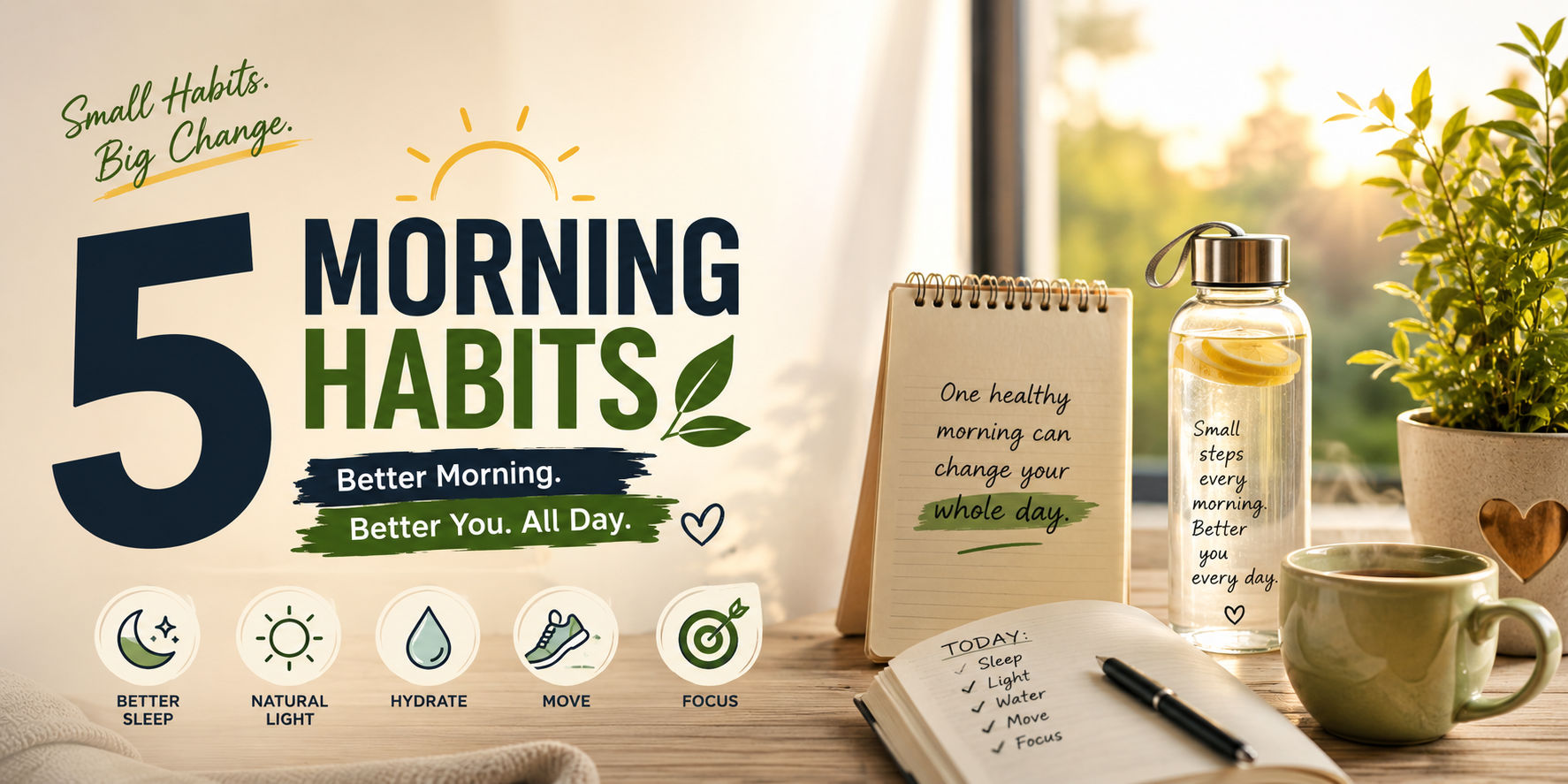
A good day does not require a complicated morning routine. The most effective morning habits are often simple, practical, and easy to repeat.
Getting enough sleep, getting natural morning light, drinking water, moving your body, and deciding what matters most can help create a healthier and more organized start to your day. These habits support important areas of well-being, including sleep, physical activity, hydration, daily focus, and overall health.
The key is consistency—not perfection.
What are the best morning habits for feeling better all day?
The best healthy morning habits are simple behaviors that support your sleep-wake cycle, hydration, physical activity, nutrition, and daily focus. A practical morning routine can include getting enough sleep, seeing natural daylight, drinking water, moving your body, and choosing one important priority for the day.
Here are five habits worth adding to your routine.
1. Get Enough Sleep Before You Try to Optimize Your Morning
The best morning routine starts the night before.
Waking up early is not automatically healthier if it means sacrificing sleep. For most adults, getting enough quality sleep should come before adding workouts, journaling, meditation, or other morning activities.
The CDC notes that most healthy adults need 7 or more hours of sleep each day, while consistent sleep and wake times can support healthy sleep habits.
Before trying to create the “perfect” morning routine, ask yourself:
- Am I getting enough sleep?
- Do I wake up feeling reasonably rested?
- Is my bedtime fairly consistent?
- Do I regularly rely on caffeine because I feel exhausted?
- Does my morning schedule allow enough time for sleep?
What is the healthiest way to start your morning?
Start by protecting your sleep. A consistent bedtime and wake-up schedule, combined with enough time for quality sleep, provides a stronger foundation for a healthy morning than simply waking up earlier.
Simple morning habit: Set a realistic bedtime that gives you enough opportunity to sleep, then maintain a reasonably consistent wake-up time.
Remember: Waking up at 5 a.m. is not a requirement for a healthy morning routine.
2. Get Natural Morning Light
Getting natural light is one of the easiest healthy morning habits to add to your day.
Light is an important signal for your body’s circadian rhythm, the internal timing system that helps regulate sleep and wakefulness. CDC/NIOSH guidance explains that the light-dark cycle influences the circadian clock, sleep, and alertness, with morning light playing an important role in this system.
You do not need an elaborate light-therapy routine.
Try:
- Opening your curtains after waking
- Sitting near a bright window
- Drinking your morning tea or coffee outdoors
- Taking a short morning walk
- Spending some time outside in daylight
Natural outdoor light is generally much brighter than typical indoor lighting, making outdoor time a practical way to increase daytime light exposure.
Does morning sunlight help your body clock?
Morning light provides an environmental timing cue to the circadian system and can support normal sleep-wake timing. Bright light shortly after waking may also help increase alertness.
Simple morning habit: Open the curtains or step outside soon after waking instead of spending your entire morning in a dark room.
3. Drink Water and Make Nourishing Food Choices
Hydration is another simple part of a healthy morning routine.
After several hours of sleep, drinking water can help you maintain your daily fluid intake. Your individual water needs vary depending on factors such as activity level, climate, age, and other personal circumstances.
You do not need a special “detox” drink or a specific amount of water immediately after waking.
Plain water is an easy choice for most people.
If you eat breakfast, choose foods that fit your overall healthy eating pattern. Depending on your preferences, that could include:
- Eggs
- Fruit
- Vegetables
- Whole grains
- Yogurt
- Nuts and seeds
- Beans or other protein-rich foods
You also do not have to force yourself to eat immediately after waking if you are not hungry. What matters more is your overall eating pattern throughout the day.
What should you drink first thing in the morning?
Water is a simple choice for morning hydration. Coffee and unsweetened tea can also fit into many healthy diets, but hydration should not become an excuse to consume large amounts of sugary drinks.
Simple morning habit: Keep a glass or bottle of water nearby so drinking water becomes an automatic part of your morning.
4. Move Your Body for Better Energy and Focus
You do not need a one-hour workout to make movement part of your morning routine.
A short walk, gentle stretching, mobility exercises, yoga, cycling, or another activity you enjoy can help you transition from sleep into an active day.
Physical activity has both immediate and long-term benefits. The CDC reports that physical activity can help people feel, function, and sleep better, while even some moderate-to-vigorous activity can provide health benefits.
For overall health, current CDC guidance recommends that adults get at least 150 minutes of moderate-intensity physical activity each week, along with muscle-strengthening activities on at least two days each week.
That does not mean all your exercise needs to happen in the morning.
Is morning exercise better than exercising later?
Not necessarily. The best time to exercise is often the time that fits your schedule and allows you to stay consistent.
If mornings work for you, try:
2–5 minutes: Stretching or mobility
5–10 minutes: Brisk walking
10–20 minutes: Walking, yoga, cycling, or a moderate workout
Longer session: Your regular exercise routine
If you are new to exercise, start gradually rather than immediately attempting an intense workout.
Simple morning habit: Move your body for a few minutes after waking, then build your activity level as your schedule and fitness allow.
5. Choose One Important Priority for the Day
A healthy morning routine is not only about physical health. It can also help you start the day with greater structure and intention.
Before opening social media, responding to every notification, or getting overwhelmed by your inbox, take a moment to decide what matters most.
Ask yourself:
“What is the one thing I want to accomplish today?”
Your priority could be:
- Completing an important work project
- Exercising
- Preparing a healthy meal
- Studying
- Making progress on a personal project
- Calling someone you care about
- Finishing an important appointment or task
You can create a longer to-do list afterward, but choosing one priority first keeps your morning simple.
Why is planning your morning helpful?
Choosing one priority gives your day a clear starting point. Instead of immediately reacting to notifications, emails, and other people’s demands, you begin by identifying what matters to you.
Simple morning habit: Write down one important task before you get lost in your phone.
A Simple 20-Minute Morning Routine
You do not need a complicated morning routine for energy and focus.
Try this simple schedule:
|
Time |
Morning Habit |
|
0–2 minutes |
Get up and open the curtains |
|
2–5 minutes |
Drink some water |
|
5–15 minutes |
Walk, stretch, or move |
|
15–17 minutes |
Spend time in natural daylight |
|
17–20 minutes |
Choose your main priority |
If you have more time, you can add breakfast, a longer workout, reading, journaling, meditation, or another activity you genuinely enjoy.
Your morning routine should fit your lifestyle—not create another source of stress.
Morning Habits That May Make Your Day Harder
Not every popular morning routine is automatically healthy.
Some habits can work against your goals, especially if they consistently leave you tired or stressed.
Try to avoid:
- Sacrificing sleep to wake up extremely early
- Creating an unrealistic morning schedule
- Spending a long time scrolling social media immediately after waking
- Using exercise as punishment
- Relying heavily on caffeine to compensate for poor sleep
- Creating an enormous morning to-do list
- Following a rigid routine that becomes stressful when something changes
A healthy morning routine should make your day easier to manage.
Do You Need to Wake Up at 5 A.M. to Have a Healthy Morning Routine?
No. There is no universal requirement to wake up at 5 a.m. A healthy morning routine should prioritize adequate sleep, a sustainable schedule, physical activity, appropriate daylight exposure, hydration, nutritious food choices, and habits that fit your lifestyle.
Someone who wakes at 7 a.m. after getting enough sleep may have a healthier routine than someone who wakes at 5 a.m. after regularly sleeping too little.
The goal is not to wake up earlier.
The goal is to wake up well-rested and use your morning intentionally.
What If You Don’t Have Time for a Long Morning Routine?
You can create a useful morning routine in just a few minutes.
Try this 5-minute morning routine:
- Open the curtains or step outside.
- Drink some water.
- Stretch or walk for a few minutes.
- Take a moment to decide your priority.
- Start your normal morning.
You do not need to complete every wellness habit every day.
Start small, make the habit easy, and build your routine gradually.
How Long Does It Take to Build a Morning Routine?
There is no universal number of days required to build a habit.
Instead of focusing on a specific deadline, make your routine easy to repeat and connect new behaviors to things you already do.
For example:
Wake up → open curtains → drink water → move → choose priority
Repeating the same sequence can make your daily healthy habits easier to remember.
If you miss a day, simply return to the routine the next morning.
Consistency matters more than perfection.
The Bottom Line
The best morning routine is not necessarily the longest, earliest, or most complicated one. It is a routine that supports your health and fits realistically into your life.
Start with these five simple morning habits:
- Get enough sleep.
- Get natural morning light.
- Drink water and make nourishing food choices.
- Move your body.
- Choose one important priority.
Together, these habits can create a more intentional start to your day while supporting important areas of health such as sleep, physical activity, hydration, nutrition, circadian timing, and daily focus.
You do not have to change your entire lifestyle tomorrow.
Start with one healthy morning habit, make it easy, and build from there.
Frequently Asked Questions About Morning Habits
What are the best morning habits for energy?
Getting enough sleep is the foundation of a healthy morning. After that, natural daylight, hydration, physical movement, nutritious food choices, and a clear daily priority can help create a supportive start to the day.
What should I do immediately after waking up?
Open the curtains or step outside, drink some water, and move gently. Then decide what matters most for your day. You can adjust the order to fit your schedule.
Is drinking water first thing in the morning good for you?
Drinking water after waking can contribute to your daily fluid intake. However, there is no need to force a specific amount immediately after waking because individual hydration needs vary.
Is a morning walk good for you?
Yes. A morning walk is a practical way to add physical activity to your day. However, you do not have to exercise in the morning to benefit from physical activity. The best time is one that works consistently for you.
Should I check my phone when I wake up?
You can, but delaying social media and notifications can make it easier to start your morning intentionally. Try completing one small habit first, such as getting daylight, drinking water, or choosing your main priority.
How many morning habits should I have?
Start with one or two habits. Once they become easier to maintain, add another. A short routine you follow consistently is more practical than an elaborate routine you quickly abandon.
Can a morning routine improve your mental well-being?
Healthy behaviors such as adequate sleep, regular physical activity, and consistent daily routines support overall health and well-being. However, a morning routine should not replace professional care for persistent mental or physical health concerns.