





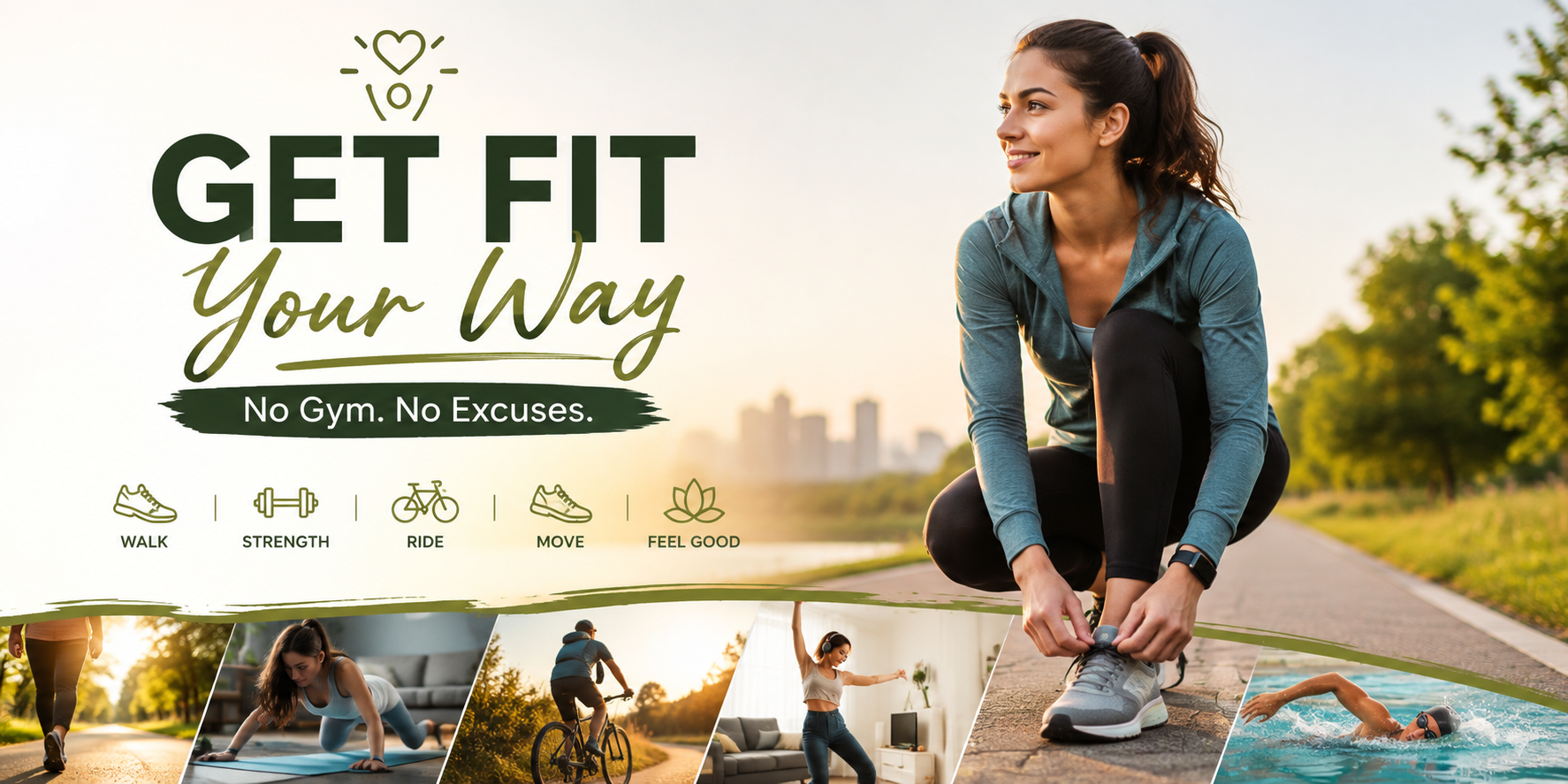
How to Get Fit Without a Gym
You don’t need a gym membership to get fit.
If you hate crowded gyms, treadmills, complicated equipment, or spending an hour exercising indoors, there are plenty of other ways to improve your fitness, strength, cardiovascular health, and overall activity level.
Walking, home workouts, cycling, dancing, swimming, hiking, recreational sports, resistance bands, and bodyweight exercises can all be part of an effective fitness routine.
The most important factor is consistency. The best workout is one you enjoy enough to keep doing.
For adults ages 18–64, the World Health Organization recommends 150–300 minutes of moderate-intensity aerobic activity per week, or 75–150 minutes of vigorous activity, plus muscle-strengthening activities on at least two days per week.
You don’t have to reach that target immediately. If you’re inactive, starting with small amounts and gradually increasing your activity is a practical approach.
Can You Get Fit Without Going to the Gym?
Yes. You can get fit without going to the gym by combining cardio, strength training, and everyday physical activity. Walking, cycling, swimming, dancing, hiking, sports, bodyweight workouts, and resistance-band exercises can all help improve fitness. A gym is simply one place to exercise—not a requirement for getting in shape.
Physical activity includes much more than formal workouts. Walking or cycling for transportation, household chores, recreational activities, sports, and planned exercise can all contribute to your overall activity level.
Why Do You Hate Going to the Gym?
If you hate the gym, you may not actually hate exercise.
You may simply dislike the gym environment.
Common reasons include:
- Crowded workout spaces
- Feeling self-conscious
- Waiting for equipment
- Repetitive cardio machines
- Complicated exercise routines
- Loud music
- Driving to the gym
- Changing before and after workouts
- Feeling pressured to exercise for a long time
- Paying for a membership you rarely use
Identifying what you dislike can help you find an exercise routine that fits your lifestyle.
For example, if you hate exercising indoors, try walking, cycling, hiking, or outdoor sports. If you dislike repetitive workouts, try dancing or recreational sports.
Don’t force yourself to become a gym person. Find a way to become a more active person.
What Is the Best Exercise for People Who Hate Exercise?
The best exercise for people who hate exercise is an activity that feels manageable, enjoyable, convenient, and easy to repeat. Walking, dancing, cycling, swimming, hiking, sports, bodyweight exercises, and home workouts can all be effective choices. The best option depends on your fitness level, preferences, goals, and lifestyle.
Instead of searching for the “perfect workout,” create a list of activities you don’t mind doing.
|
If you hate… |
Try… |
|
Going to the gym |
Home workouts |
|
Running |
Walking or cycling |
|
Treadmills |
Hiking or outdoor sports |
|
Weight machines |
Bodyweight exercises or resistance bands |
|
Long workouts |
Short workouts |
|
Exercising alone |
Team sports or workout partners |
|
Repetitive cardio |
Dancing, swimming, or sports |
|
Exercising indoors |
Walking, cycling, or hiking |
1. Start With Walking
Walking is one of the easiest ways to get fit without a gym.
You don’t need expensive equipment, a membership, or advanced exercise skills. You can walk around your neighborhood, at a park, during your lunch break, or as part of your commute.
Try:
- Walking after meals
- Taking the stairs
- Walking while talking on the phone
- Walking to nearby shops
- Walking with a friend
- Listening to music or podcasts while walking
- Taking longer walks on weekends
If you’re currently inactive, start with a comfortable amount of walking and gradually increase your time or pace.
Simple beginner walking plan
Week 1: 10–15 minutes, 5 days
Week 2: 15–20 minutes, 5 days
Week 3: 20–25 minutes, 5 days
Week 4: 25–30 minutes, 5 days
Adjust the plan according to your current fitness level.
2. Try Home Workouts
Home workouts are one of the best alternatives to going to the gym.
You can improve strength and fitness with little or no equipment.
A basic full-body workout can include:
- Squats
- Push-ups or incline push-ups
- Lunges
- Glute bridges
- Step-ups
- Planks
- Resistance-band rows
Beginner home workout
Complete 2–3 rounds:
- Squats: 8–15 repetitions
- Incline push-ups: 6–12 repetitions
- Glute bridges: 10–15 repetitions
- Resistance-band rows: 8–15 repetitions
- Step-ups: 8–12 per leg
- Plank: 15–30 seconds
Choose an easier variation if necessary.
As you get stronger, gradually increase the number of repetitions, resistance, range of motion, or exercise difficulty.
3. Use Resistance Bands
Resistance bands are a simple way to add strength training at home without buying a large collection of weights.
You can use resistance bands for:
- Rows
- Squats
- Chest presses
- Shoulder exercises
- Glute exercises
- Hip exercises
- Biceps curls
- Triceps exercises
They’re also portable, making them useful for travel or small living spaces.
4. Make Exercise Fun
If you hate traditional workouts, turn exercise into recreation.
Try:
- Dancing
- Badminton
- Basketball
- Football or soccer
- Tennis
- Pickleball
- Swimming
- Hiking
- Roller skating
- Martial arts
- Recreational cycling
You don’t have to compete or become an expert.
If you spend an hour playing a sport because you’re having fun, you’re still being physically active.
WHO recognizes physical activity as more than formal exercise. It can include transportation, recreation, sports, household activities, work, and planned exercise.
5. Try Cycling
Cycling can combine exercise and transportation.
Instead of driving for every short trip, consider cycling when it is practical and safe.
You can also use cycling for:
- Weekend rides
- Exploring your area
- Commuting
- Visiting parks
- Recreational exercise
As with any outdoor activity, consider traffic, weather, road conditions, visibility, and appropriate safety equipment.
6. Dance at Home
Dancing is an easy way to add cardio without doing a traditional cardio workout.
Try:
- Dancing to your favorite playlist
- Follow-along dance workouts
- Dance classes
- Social dancing
- Dancing at home for 15–30 minutes
You don’t need perfect technique.
The goal is simply to move consistently.
7. Go Hiking
Hiking combines cardio, outdoor activity, and recreation.
You can adjust the difficulty by changing:
- Distance
- Walking speed
- Terrain
- Elevation
- Duration
Start with a trail that matches your experience and fitness level.
For longer hikes, consider water, suitable footwear, weather conditions, navigation, and trail safety.
8. Break Your Workout Into Short Sessions
If the idea of a 60-minute workout makes you want to skip exercise altogether, make your workouts shorter.
For example:
Morning: 10-minute walk
Lunch: 10-minute walk
Evening: 10-minute strength workout
Short sessions can be easier to fit into a busy day.
WHO’s current guidance emphasizes that physical activity can come from many parts of daily life, and that increasing activity from a low starting point is beneficial.
9. Move More During the Day
You don’t have to treat every bit of movement as a workout.
Try:
- Taking the stairs
- Walking during phone calls
- Parking farther away
- Walking short errands
- Gardening
- Doing household chores
- Playing actively with children
- Walking the dog
- Taking regular movement breaks
These activities can help reduce sedentary time and increase your overall physical activity.
They don’t necessarily replace dedicated strength training, but they can make an active lifestyle easier to maintain.
10. Exercise With a Friend
Working out with someone else can make exercise more enjoyable.
Ask a friend or family member to:
- Go for a walk
- Play a sport
- Go hiking
- Ride bicycles
- Swim
- Try a home workout
- Take a dance class
You can also join a recreational sports group, walking group, or community fitness activity.
The social aspect can make exercise feel less like a chore.
11. Use the 10-Minute Workout Rule
One of the easiest ways to overcome exercise resistance is to lower the starting point.
Instead of telling yourself:
“I have to work out for an hour.”
Try:
“I’ll move for 10 minutes.”
After 10 minutes, you can stop if you want.
If you feel good, continue.
This removes the all-or-nothing mindset.
A short workout is better than repeatedly waiting for the perfect time to exercise.
12. Choose Fitness Activities You Actually Enjoy
Your exercise routine should match your personality and lifestyle.
If you love the outdoors
Try:
- Walking
- Hiking
- Cycling
- Running
- Swimming
- Outdoor sports
If you love music
Try:
- Dancing
- Dance workouts
- Walking with music
- Cycling with a playlist
If you enjoy competition
Try:
- Tennis
- Badminton
- Basketball
- Football
- Pickleball
- Martial arts
If you prefer privacy
Try:
- Home workouts
- Bodyweight exercises
- Resistance bands
- Walking
- Cycling
If you hate long workouts
Try:
- 10-minute walks
- Short home workouts
- Movement breaks
- Brief cycling sessions
- Several short activity sessions throughout the day
How Much Exercise Do You Need?
For adults ages 18–64, WHO recommends 150–300 minutes of moderate-intensity aerobic activity each week, or 75–150 minutes of vigorous activity, or an equivalent combination. Adults should also perform muscle-strengthening activities involving the major muscle groups on at least two days each week.
You don’t need to start at the maximum recommendation.
If you’re currently inactive, start with an amount you can manage and gradually build your activity.
A simple weekly fitness routine could look like this:
|
Day |
Workout |
|
Monday |
30-minute brisk walk |
|
Tuesday |
20-minute home strength workout |
|
Wednesday |
30-minute bike ride |
|
Thursday |
20-minute strength workout |
|
Friday |
30-minute walk |
|
Saturday |
Hiking or recreational sport |
|
Sunday |
Easy walk or rest |
This is only an example. Your routine should reflect your schedule, fitness level, and preferences.
Is Walking Enough to Get Fit?
Walking can be an excellent foundation for fitness, especially if you’re currently inactive. However, a well-rounded fitness routine should also include muscle-strengthening activity. Combining walking or other aerobic exercise with strength training and everyday movement provides a more complete approach to physical fitness.
If walking is the activity you enjoy, make it the foundation of your routine.
Then add two strength-training sessions each week.
You don’t have to start running simply because someone else prefers running.
Can You Lose Weight Without Going to the Gym?
Yes. You can lose weight without a gym, but exercise is only one part of weight management. Physical activity can support calorie expenditure, fitness, and overall health, while eating habits also influence body weight. The amount of activity needed varies between individuals, so sustainable habits are more useful than extreme workout programs.
If weight loss is your goal, focus on sustainable habits such as:
- Walking more
- Doing regular cardio
- Strength training
- Eating a nutritious diet that supports your goals
- Getting adequate sleep
- Avoiding extreme exercise plans
Physical activity has health benefits even when weight loss isn’t the outcome.
How Do You Stay Motivated to Exercise?
You don’t have to rely on motivation alone.
Instead, make exercise easier to start.
Make exercise convenient
Keep your walking shoes, resistance bands, or workout clothes somewhere easy to access.
Start small
A 10-minute workout can be easier to start than a one-hour workout.
Combine exercise with entertainment
Listen to music, podcasts, or audiobooks while walking.
Schedule workouts
Put your walks and home workouts on your calendar.
Track consistency
Track workouts, walking time, cycling sessions, or sports instead of focusing only on weight.
Add variety
Switch between walking, strength training, cycling, dancing, hiking, and sports.
Focus on consistency
You don’t need to love every workout.
You simply need a routine you can keep doing.
What If You’re Completely Out of Shape?
Start slowly.
If you haven’t exercised recently, begin with comfortable walking and simple strength exercises. Increase duration, frequency, or intensity gradually rather than jumping into an intense workout program.
WHO recommends that inactive people start with small amounts of physical activity and gradually increase duration, frequency, and intensity.
If you have a medical condition, significant symptoms, or concerns about starting a new exercise program, speak with a qualified healthcare professional for individualized advice.
Stop exercising and seek appropriate medical advice if you experience concerning symptoms such as chest pain, fainting, or unusual severe shortness of breath.
A Simple No-Gym Workout Plan for Beginners
If you want a simple beginner workout plan at home, start here.
Monday: Walking
Walk for 20–30 minutes at a comfortable-to-brisk pace.
Tuesday: Strength Training
Complete a 15–20-minute bodyweight or resistance-band workout.
Wednesday: Fun Cardio
Dance, cycle, swim, hike, or play a sport for 20–30 minutes.
Thursday: Strength Training
Repeat Tuesday’s workout or use different exercises.
Friday: Walking
Walk for 20–30 minutes.
Saturday: Longer Activity
Go hiking, cycling, swimming, or play a recreational sport.
Sunday: Recovery
Rest or take an easy walk.
As your fitness improves, gradually increase your activity.
Stop Trying to Become a “Gym Person”
You don’t have to wake up at 6 a.m. to lift weights.
You don’t need a gym membership.
You don’t need expensive fitness equipment.
You don’t need to exercise for an hour every day.
And you don’t have to enjoy every minute of exercise.
You need a sustainable way to move more, build strength, improve cardiovascular fitness, and stay active.
For one person, that might mean hiking every weekend. For another, it could mean walking every evening, doing two home workouts a week, and playing badminton with friends.
Fitness should fit your life—not force you to completely change your life.
Frequently Asked Questions
Can I really get fit without a gym?
Yes. Home workouts, walking, cycling, swimming, dancing, hiking, sports, resistance bands, and bodyweight exercises can all contribute to fitness. A gym is optional.
What is the easiest workout if I hate exercise?
Walking is one of the simplest places to start. You can also try dancing, cycling, swimming, hiking, recreational sports, or short home workouts. Choose an activity that feels manageable enough to repeat.
How do I exercise if I hate working out?
Choose activities that don’t feel like traditional workouts. Walk while listening to a podcast, dance to your favorite music, play sports with friends, cycle, hike, or do short home workouts. Starting with 10 minutes can make exercise feel more manageable.
Can 20 minutes of exercise a day make a difference?
Yes. Twenty minutes of activity is better than doing nothing, particularly if you’re currently inactive. Over time, you can gradually increase your activity toward recommended weekly levels while including strength training at least twice a week.
Do I need to exercise every day?
No. You don’t need a formal workout every day. A balanced weekly routine can combine aerobic activity, strength training, recreational activities, and everyday movement.
Is walking enough to stay healthy?
Walking is valuable physical activity and can be an excellent starting point. However, adults are also advised to perform muscle-strengthening activities involving the major muscle groups at least two days per week.
How can I build muscle without going to the gym?
Bodyweight exercises such as squats, push-ups, lunges, step-ups, glute bridges, and planks can help build strength. Resistance bands can provide additional resistance. Gradually increase exercise difficulty as you become stronger.
What is the best gym alternative?
The best gym alternative depends on your preferences and goals. Good options include home workouts, walking, cycling, swimming, hiking, dancing, recreational sports, martial arts, bodyweight training, and resistance-band workouts.
Final Takeaway
You can get fit without going to the gym.
You don’t need a membership, expensive equipment, or complicated workout programs.
Start with an activity you enjoy. Walk more. Add regular strength training. Try cycling, dancing, hiking, swimming, or sports. Break workouts into shorter sessions when necessary.
Most importantly, choose an exercise routine you can maintain.
The best workout isn’t necessarily the hardest workout. It’s the workout you can keep doing.