





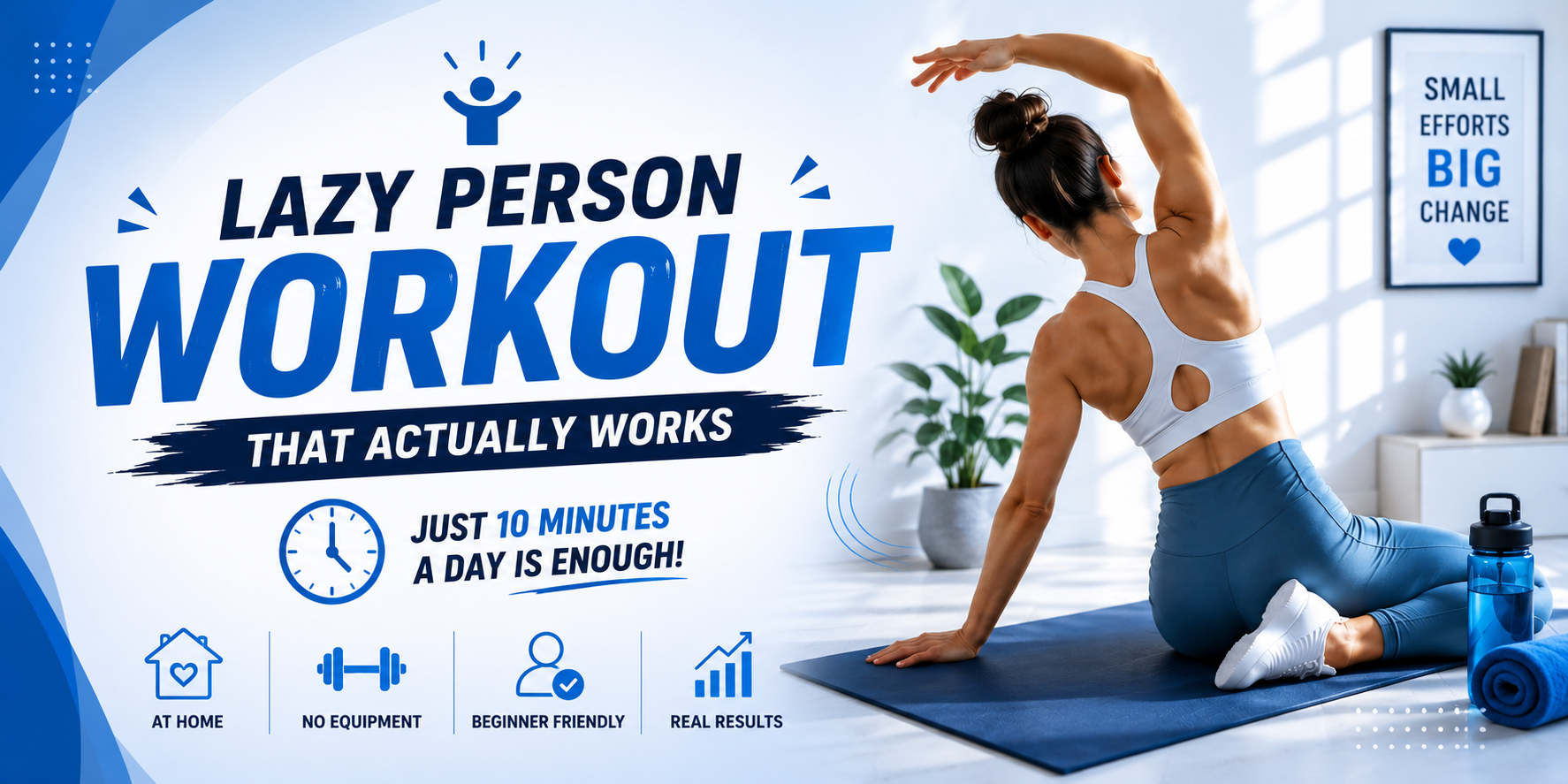
If the thought of spending an hour at the gym makes you want to stay on the couch, you are not alone. You do not need an intense gym workout to become more active. A lazy person workout can be short, simple, low-impact, and easy enough to fit into a busy day.
The goal is not to find the hardest exercise routine. It is to create a simple workout you can actually stick with.
What Is a Lazy Person Workout?
A lazy person workout is a short, beginner-friendly exercise routine that makes physical activity easy to start and repeat. It usually includes simple movements such as walking, chair squats, wall push-ups, stretching, and basic bodyweight exercises.
“Lazy person workout” is not a formal medical or fitness term. It is better understood as an approachable strategy for people who struggle with motivation, time, energy, or consistency.
The basic idea is simple: some physical activity is better than none, and inactive adults can start with small amounts before gradually doing more. WHO recommends that adults work toward 150–300 minutes of moderate-intensity aerobic activity per week, along with muscle-strengthening activity on at least two days.
Does a Short Workout Actually Work?
Yes. A short workout can be a useful starting point, especially for someone who currently does little physical activity.
You do not need to complete a long gym session every time you exercise. Starting with a manageable amount of movement can make it easier to establish a regular fitness habit. WHO specifically recommends that inactive adults start with small amounts of physical activity and gradually increase frequency, intensity, and duration.
The biggest benefit of a quick workout may be consistency. A 5- or 10-minute workout that you regularly complete is a more practical starting point than an ambitious exercise plan you continually postpone.
The Best 10-Minute Lazy Person Workout
This 10-minute home workout for beginners requires little or no equipment.
1. March in Place — 2 Minutes
Stand comfortably and march in place while moving your arms naturally.
Start at an easy pace. If you feel comfortable, gradually increase your speed.
Why it helps: Marching gets your body moving and can raise your heart rate without requiring complicated equipment or exercise techniques.
2. Chair Squats — 1 Minute
Stand in front of a sturdy chair with your feet approximately hip-width apart.
Bend your knees and slowly lower your hips toward the chair. Then stand back up with control.
Beginner tip: Start with a small number of repetitions and focus on controlled movement rather than speed.
3. Wall Push-Ups — 1 Minute
Place your hands against a wall around chest height. Step backward and keep your body relatively straight.
Bend your elbows to bring your chest toward the wall, then push yourself back to the starting position.
Why it helps: Wall push-ups are a beginner-friendly alternative to floor push-ups and provide an easy way to introduce upper-body strengthening.
4. Glute Bridges — 1 Minute
Lie on your back with your knees bent and feet flat on the floor.
Gently tighten your core, lift your hips, and lower them slowly.
If getting down on the floor is uncomfortable, replace this exercise with another movement that feels safe and manageable.
5. Easy or Brisk Walking — 3 Minutes
Walk around your home, outside, or on a treadmill.
If your fitness level allows, gradually increase your pace.
The talk test can help you judge moderate intensity: during moderate activity, you should generally be able to talk but not sing.
6. Gentle Stretching and Breathing — 2 Minutes
Finish your quick workout at home with comfortable movements such as shoulder rolls, relaxed arm movements, and gentle leg stretches.
Avoid forcing a stretch or bouncing aggressively.
Simple Lazy Person Workout Schedule
You do not need to complete the full routine every day.
A beginner-friendly weekly exercise plan could look like this:
|
Day |
Easy Fitness Routine |
|
Monday |
10-minute home workout |
|
Tuesday |
10–20-minute easy walk |
|
Wednesday |
Rest or gentle movement |
|
Thursday |
10-minute beginner workout |
|
Friday |
Easy or brisk walk |
|
Saturday |
Optional workout or active hobby |
|
Sunday |
Rest or gentle movement |
As your fitness improves, gradually increase your workout duration, frequency, or intensity.
For substantial health benefits, adults should work toward 150–300 minutes of moderate-intensity aerobic activity each week, or an equivalent amount of vigorous activity, plus muscle-strengthening activities on at least two days per week.
What If You Have No Motivation to Exercise?
Try the 5-minute workout rule.
Instead of telling yourself that you need to exercise for an hour, commit to moving for just five minutes.
Put on your comfortable shoes, start walking, and see how you feel. If you still want to stop after five minutes, you can stop. If you feel ready to continue, keep going.
This approach reduces the mental barrier to starting.
The objective is not to force yourself into an exhausting workout. It is to make starting exercise feel easy.
Easy Ways to Exercise Without Going to the Gym
You do not need to treat every movement as a formal workout.
Physical activity can come from transportation, household chores, recreation, sports, walking, cycling, and planned exercise. WHO recognizes these everyday activities as forms of physical activity.
Try these simple ways to exercise without a gym:
- Take the stairs when practical
- Walk while talking on the phone
- Park slightly farther from your destination
- Take a short walk after a meal
- Do household chores
- Move during work or study breaks
- Walk while listening to a podcast
- Dance to a few songs
- Play an active game
- Take short walking breaks during long periods of sitting
Small changes can make it easier to increase your daily activity without feeling like you are following a strict workout program.
Why Does a Simple Workout Work Better Than an Extreme Workout?
An intense workout is not automatically the best workout for someone who is new to exercise.
For beginners, a simple home workout can offer several practical advantages:
Less preparation: You can start without complicated equipment.
Less time: A 10-minute workout is easier to fit into a busy schedule.
Beginner-friendly: Basic movements are easier to learn and modify.
More sustainable: A manageable routine may be easier to repeat.
Easy to progress: You can gradually increase repetitions, time, or intensity.
WHO recommends that people who are not currently meeting activity guidelines start with small amounts and gradually increase their physical activity over time.
Can a Lazy Person Workout Help With Weight Loss?
A lazy person workout can contribute to weight management, but exercise should not be presented as a guaranteed weight-loss solution.
Body weight is influenced by multiple factors, including food intake, physical activity, sleep, genetics, medications, and other aspects of health.
A short workout can increase your overall activity and help establish a regular exercise habit. Combined with sustainable nutrition and other healthy lifestyle habits, regular physical activity can support long-term weight-management goals.
If your goal is weight loss for beginners, focus on creating a routine you can maintain instead of trying to burn as many calories as possible in a single workout.
What Is the Best Exercise for Someone Who Hates Exercise?
For many beginners, walking is one of the easiest exercises to start with because it requires little equipment, can be performed almost anywhere, and is easy to adjust.
Start with five or ten minutes and gradually increase your walking time.
If walking feels boring, listen to music, a podcast, or an audiobook, or walk with a friend.
Ultimately, the best exercise is one that fits your abilities, preferences, schedule, and fitness goals—and that you are willing to do consistently.
Lazy Person Workout vs. Traditional Gym Workout
|
Lazy Person Workout |
Traditional Gym Workout |
|
Usually short |
Can be longer |
|
Little or no equipment |
May require equipment |
|
Easy to do at home |
Usually requires gym access |
|
Beginner-friendly |
Beginner to advanced |
|
Focuses on consistency |
Can provide structured training |
|
Easy to start |
May require more preparation |
Neither approach is automatically better.
The right workout depends on your fitness level, goals, preferences, available time, and access to equipment.
How Can You Make Yourself Exercise When You Have No Motivation?
You do not need to depend completely on motivation. Instead, make exercise easier to begin.
Keep Your Workout Equipment Visible
Leave your walking shoes, exercise mat, or workout clothes somewhere you can easily see them.
Remove Unnecessary Preparation
Choose simple exercises that require little or no equipment.
Start Small
Instead of committing to an hour-long workout, start with five or ten minutes.
Connect Exercise to an Existing Habit
Take a short walk after lunch or do a few simple exercises after finishing work.
Make Exercise Enjoyable
Listen to music, watch something while using a treadmill, or exercise with a friend.
Track Consistency
Focus on completing your workouts regularly instead of trying to make every workout perfect.
The objective is to build a sustainable exercise habit.
Common Beginner Workout Mistakes to Avoid
Doing Too Much Too Soon
If you have been inactive, suddenly starting a very intense exercise program can leave you excessively sore and make it harder to continue.
Thinking Short Workouts Are Useless
A short workout does not provide the same amount of activity as a complete weekly fitness program, but it can be a practical starting point.
Focusing Only on Calories Burned
Exercise provides benefits beyond calorie expenditure. Regular physical activity is associated with benefits for cardiovascular health, metabolic health, mental health, cognitive health, sleep, and physical function.
Waiting for Motivation
Motivation changes from day to day. A simple routine reduces the amount of motivation needed to begin.
Comparing Yourself With Advanced Exercisers
Your starting point is different from someone else’s. Focus on your own progress.
Is 10 Minutes of Exercise a Day Enough?
Ten minutes of exercise a day is a useful starting point, but it is below the full weekly activity target recommended for most adults. Ten minutes every day adds up to about 70 minutes per week. Adults should generally work toward at least 150 minutes of moderate-intensity aerobic activity per week, plus muscle-strengthening exercises on two or more days.
The goal is to start small and gradually build your fitness routine.
How Should Beginners Progress After Two Weeks?
Once your 10-minute beginner workout starts feeling manageable, change only one thing at a time.
You can:
- Increase your workout from 10 to 15 minutes.
- Add another walking session.
- Gradually increase your walking speed.
- Add another set of a strength exercise.
- Progress from wall push-ups to a more challenging incline variation.
- Introduce appropriate resistance exercises.
- Gradually work toward your weekly physical activity target.
You do not need dramatic changes. Small, manageable increases can make your workout more challenging while keeping it sustainable.
The Real Secret to the Lazy Person Workout
The “lazy person workout” is not really about being lazy.
It is about reducing the friction between deciding to exercise and actually exercising.
You do not need an expensive gym membership, complicated workout plan, advanced equipment, or hours of free time.
Start with a short walk.
Do a few chair squats.
Try wall push-ups.
Move for five minutes instead of sitting.
Then do it again.
Over time, these small actions can become a consistent fitness habit.
The Easiest Workout Is the One You Can Repeat
The best lazy person workout is a short, simple exercise routine that you can realistically repeat. Start with 5–10 minutes of walking and beginner-friendly bodyweight exercises, then gradually increase your activity. For substantial health benefits, adults should work toward 150–300 minutes of moderate aerobic activity each week and muscle-strengthening exercises on at least two days.
Frequently Asked Questions
What is the easiest workout for a lazy person?
Walking is one of the easiest ways to start exercising. You can combine short walks with beginner exercises such as chair squats and wall push-ups. Start with five to ten minutes and gradually increase your activity as your fitness improves.
Can I lose weight with a 10-minute workout?
A 10-minute workout can increase your overall physical activity, but weight loss depends on several factors. For sustainable results, combine regular movement with healthy eating and other lifestyle habits rather than relying on a short workout alone.
Is walking enough exercise?
Walking can provide valuable aerobic activity, particularly when performed at a moderate intensity. However, adults should also include muscle-strengthening activities at least two days per week and work toward the recommended weekly activity level.
How often should a beginner work out?
A beginner can start with manageable exercise sessions throughout the week and gradually increase frequency and duration. Your starting point should reflect your current fitness level, abilities, health, and goals.
What if I hate going to the gym?
You do not need a gym to become more active. Walking, bodyweight exercises, cycling, dancing, household activities, and beginner home workouts can all contribute to your physical activity.
Is a little exercise better than no exercise?
Yes. WHO states that doing some physical activity is better than doing none and recommends that inactive adults begin with small amounts and gradually increase their activity.
Can beginners do this workout at home?
Yes. These beginner exercises require little or no equipment and can generally be performed at home. Choose exercise variations appropriate for your current abilities and stop if an exercise causes pain.
Important Safety Note
This article provides general fitness information and is not individualized medical advice.
If you have a medical condition, significant joint or muscle problems, are recovering from an injury, are pregnant or postpartum, or are unsure whether exercise is appropriate for you, consider speaking with a qualified healthcare professional before starting or significantly increasing physical activity.
Stop exercising and seek appropriate medical attention if you experience concerning symptoms such as chest pain, severe shortness of breath, fainting, or other unusual symptoms.