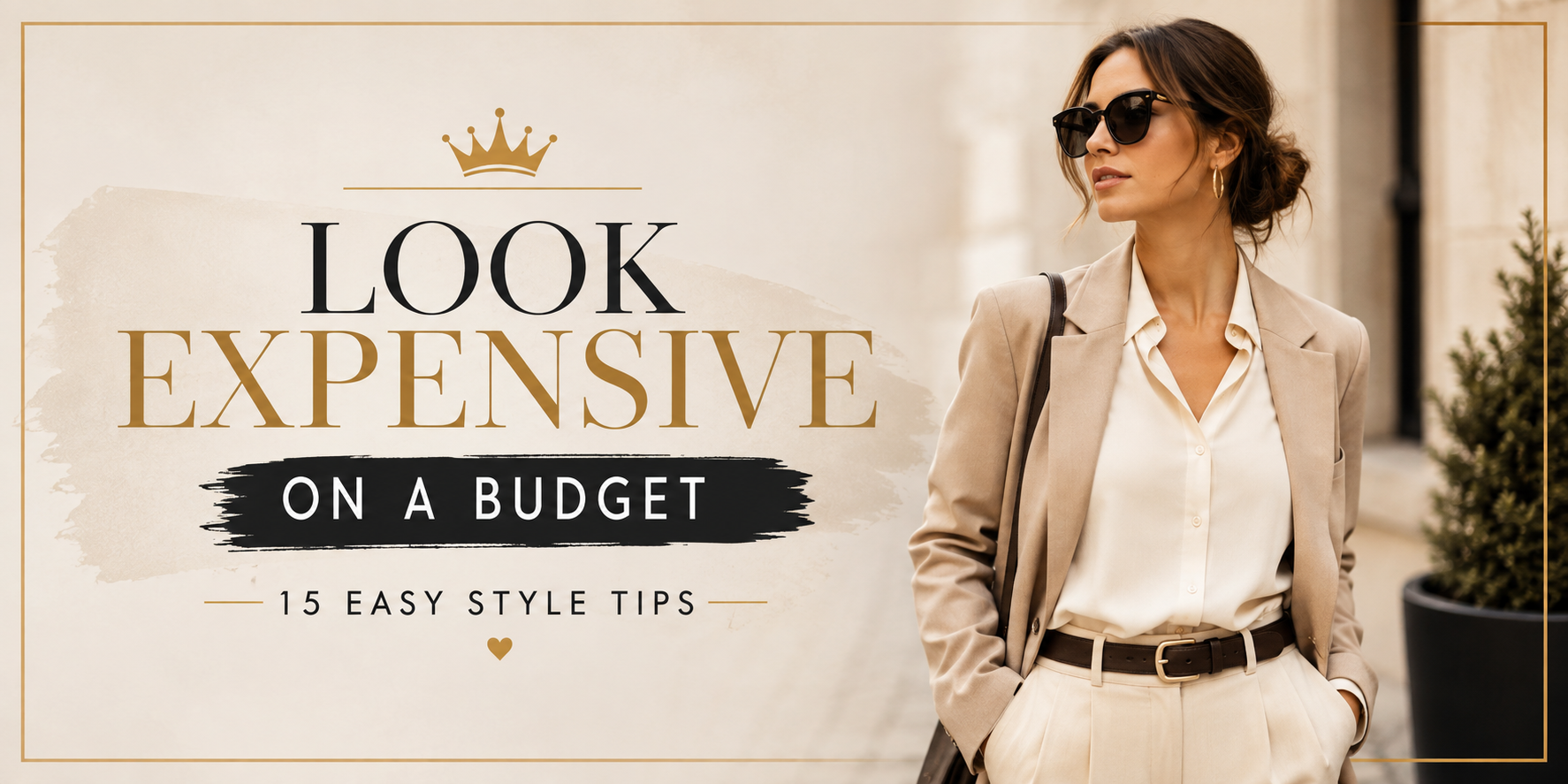

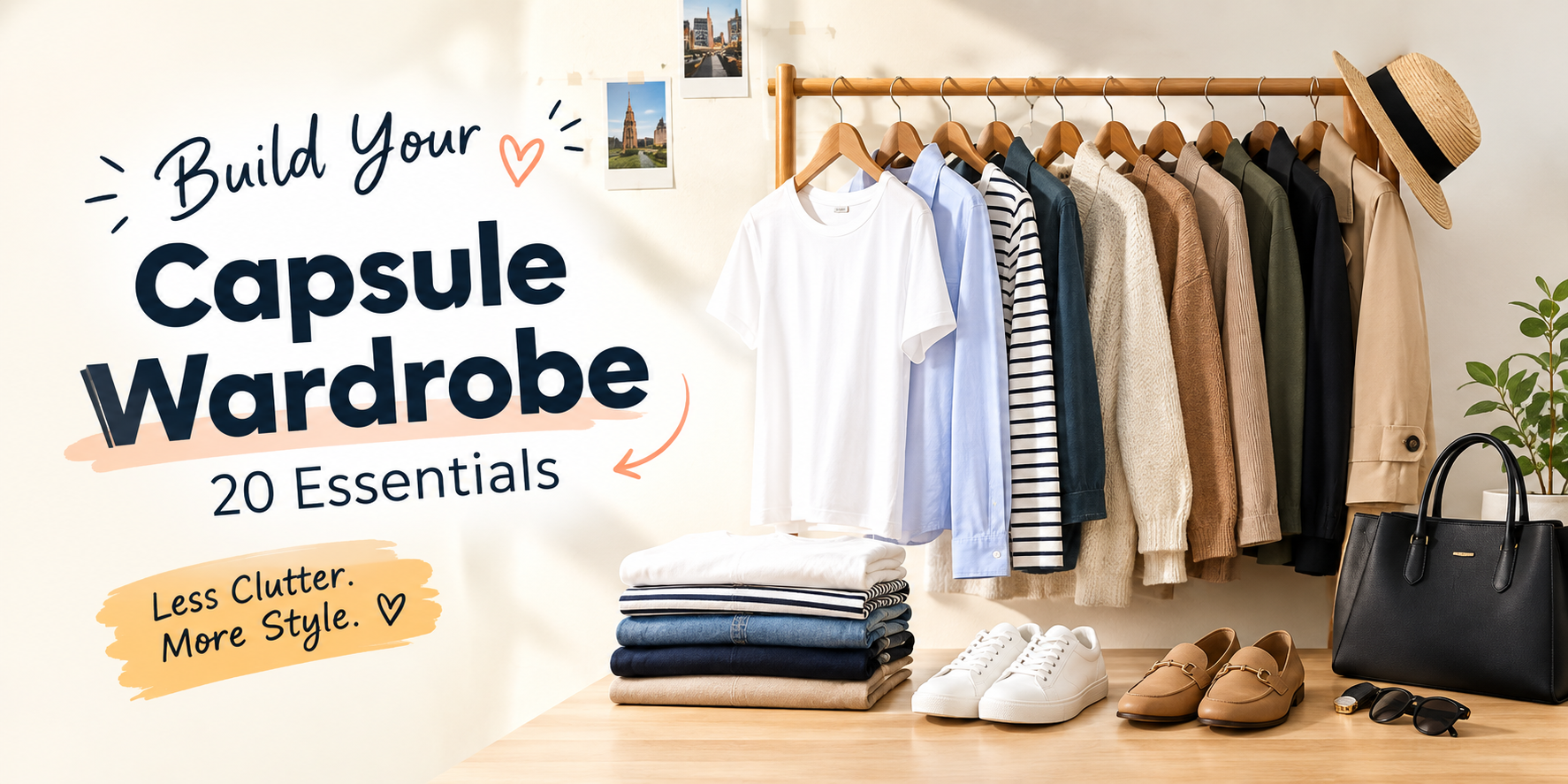
Building a capsule wardrobe can make getting dressed easier, reduce closet clutter, and help you shop more intentionally.
A capsule wardrobe is not about owning as few clothes as possible. It is about creating a small, practical collection of versatile pieces that work well together and suit your lifestyle.
Your ideal capsule wardrobe will depend on your climate, work environment, daily routine, personal style, budget, and social life. What works for someone in an office may not work for someone who works from home. Likewise, a wardrobe for a hot climate will look different from one designed for cold weather.
The 20 pieces below provide a useful starting point. Think of them as flexible wardrobe essentials rather than strict rules.
What Is a Capsule Wardrobe?
A capsule wardrobe is a carefully selected collection of clothing, shoes, and accessories that can be mixed and matched to create multiple outfits.
The goal is simple: own fewer pieces that work harder.
A well-planned capsule wardrobe can make daily outfit choices easier, reduce clutter, and help prevent unnecessary shopping. However, there is no universally correct number of pieces. The right size depends on your lifestyle, climate, laundry routine, and personal preferences.
The number matters less than the principle: choose clothes you wear regularly, enjoy wearing, and can combine easily with the rest of your wardrobe.
How Many Pieces Should a Capsule Wardrobe Have?
There is no official number for a capsule wardrobe.
For this guide, 20 core pieces provide a practical starting point. Your complete wardrobe may contain more once you add seasonal clothing, activewear, underwear, occasion wear, accessories, and other specialist items.
For example, someone who works in an office may need more tailored clothing, while someone who works from home may need more casual pieces. Someone living in a warm climate may need breathable shirts, lightweight trousers, dresses, and sandals instead of heavy coats and sweaters.
The best capsule wardrobe is the one that fits your real life.
20 Capsule Wardrobe Essentials You Actually Need
1. A Neutral T-Shirt
A high-quality T-shirt in white, cream, black, grey, or another neutral color is one of the most useful wardrobe basics.
Wear it with jeans for a casual look, pair it with tailored trousers for a more polished outfit, or layer it under a blazer, cardigan, or jacket.
Start with one T-shirt that fits well and feels comfortable. You can always add more later if you genuinely need them.
2. A Second Everyday Top
Your second everyday top gives you more variety without making your wardrobe complicated.
Depending on your style and climate, this could be another T-shirt, a tank top, a long-sleeve top, or a simple knit top.
Choose something that creates different outfit combinations rather than simply buying another version of the same item.
3. A Classic Button-Down Shirt
A button-down shirt is one of the most versatile capsule wardrobe essentials.
White, cream, light blue, and subtle stripes are particularly easy to combine with jeans, trousers, skirts, and shorts.
Wear it tucked into tailored trousers for work, open over a T-shirt for a casual look, or with jeans for an easy smart-casual outfit.
4. A Versatile Sweater or Knit
A good sweater adds warmth, texture, and layering options to your wardrobe.
Choose a lightweight knit if you live in a warm climate or need something for transitional weather. In colder climates, a warmer wool or cashmere-blend sweater may be more useful.
Neutral colors such as navy, grey, cream, brown, and black are easy to coordinate, while an accent color can add personality.
5. A Well-Fitting Blazer
A blazer can instantly make a basic outfit look more polished.
Wear it with jeans and sneakers for a smart-casual outfit, or combine it with tailored trousers, a button-down shirt, and loafers for work.
You do not have to choose a traditional structured office blazer. A relaxed style may be more useful if your everyday wardrobe is casual.
6. A Lightweight Jacket or Trench Coat
Your outerwear should match your climate and lifestyle.
A trench coat is useful for transitional weather, while a denim jacket, bomber jacket, chore jacket, utility jacket, or lightweight overshirt may work better for everyday wear.
The most important consideration is not the trend. It is whether you will actually wear the jacket regularly.
7. A Pair of Versatile Jeans
A comfortable, well-fitting pair of jeans is a classic wardrobe essential.
Straight-leg and relaxed-leg jeans are particularly versatile because they work with T-shirts, sweaters, button-down shirts, blazers, sneakers, and loafers.
Choose the rise, cut, and wash that suit your body and lifestyle. Dark denim can create a more polished look, while medium-blue denim is a reliable everyday option.
8. Tailored Trousers
Tailored trousers give you an alternative to jeans and can make your wardrobe feel more polished.
Black, navy, charcoal, brown, beige, and cream are all practical choices.
For a casual outfit, wear tailored trousers with a T-shirt and sneakers. For a more formal look, add a button-down shirt, blazer, and loafers.
9. Casual Trousers
Your second pair of non-denim trousers should serve a different purpose from your tailored pants.
Depending on your style, this could be chinos, wide-leg trousers, linen pants, cargo trousers, drawstring pants, or another comfortable everyday option.
This piece gives you more outfit variety without requiring several pairs of jeans.
10. A Versatile Skirt or Alternative Bottom
If you wear skirts, a simple midi or knee-length skirt can be extremely versatile.
Choose a neutral color or subtle print that works with the tops and shoes you already own.
If you do not wear skirts, replace this piece with another bottom that fits your lifestyle, such as shorts, another trouser style, or a second pair of jeans.
A capsule wardrobe should adapt to you—not the other way around.
11. A Simple Dress or Jumpsuit
A simple dress or jumpsuit gives you an easy one-piece outfit when you want to get dressed quickly.
A midi dress, shirt dress, knit dress, or jumpsuit can work for everyday wear, dinners, travel, or casual events depending on how you style it.
For maximum versatility, avoid choosing something so formal or specific that you will only wear it once or twice.
12. Weather-Appropriate Shorts
If you live in a warm climate, shorts may be more useful than another pair of trousers.
Choose a comfortable, simple style that works with your everyday tops and footwear.
If you live somewhere cold, use this space for another seasonal piece that better suits your needs.
13. Clean, Versatile Sneakers
A simple pair of sneakers can work with many casual outfits.
Neutral or low-profile sneakers are particularly easy to style, but comfort should always be a priority.
Wear them with jeans, trousers, skirts, dresses, or casual tailoring.
The best sneakers for a capsule wardrobe are the ones you can comfortably wear often—not simply the ones that happen to be fashionable.
14. Loafers or Another Polished Everyday Shoe
Loafers offer a simple way to make an outfit look more polished without wearing formal dress shoes.
They work well with jeans, tailored trousers, skirts, and dresses.
If loafers are not your style, choose another comfortable polished shoe, such as ballet flats, derbies, minimalist sandals, or a similar everyday option.
15. Boots or Climate-Specific Footwear
Your footwear should reflect where you live and what you do.
This slot could be used for ankle boots, Chelsea boots, sandals, weather-resistant shoes, or another seasonal option.
There is no need to own boots simply because they appear on a standard capsule wardrobe checklist. If you live in a warm climate, sandals may be much more useful.
16. A Versatile Everyday Bag
Choose one everyday bag that works with most of your wardrobe and holds everything you actually need.
A tote, crossbody bag, shoulder bag, backpack, or structured handbag can all work.
Focus on comfort, durability, functionality, and versatility rather than choosing a bag simply because it is fashionable.
17. A Simple Belt
A belt may be a small accessory, but it can make a noticeable difference.
It can improve the fit of jeans and trousers while also adding a polished finishing touch.
Black and brown are versatile choices when they coordinate with your existing shoes and accessories.
You usually do not need a large collection of belts for a streamlined capsule wardrobe.
18. A Versatile Layering Piece
Use this piece to fill whatever layering gap exists in your wardrobe.
It could be a cardigan, overshirt, lightweight vest, denim jacket, or another easy-to-remove layer.
Layering gives you more outfit combinations without requiring a much larger wardrobe.
If you live somewhere warm, prioritize breathable materials. In colder climates, choose a layer that adds warmth without making outfits difficult to coordinate.
19. One Personal-Style Statement Piece
A capsule wardrobe does not have to be boring or completely neutral.
Choose one or two pieces that show your personality. This could be a colorful sweater, printed shirt, distinctive jacket, patterned skirt, statement shoes, or textured accessory.
The purpose of a capsule wardrobe is to simplify your closet—not remove your personal style.
20. One Seasonal or Occasion-Specific Piece
Your final piece should solve a genuine wardrobe need.
Depending on your lifestyle, it might be a formal dress, festive outfit, raincoat, warm coat, travel layer, or another specialist item.
This prevents your capsule wardrobe from being designed around an imaginary “average day.”
If you regularly attend weddings, travel for work, exercise, hike, or deal with extreme weather, your wardrobe should reflect those needs.
How Do You Build a Capsule Wardrobe?
The easiest way to build a capsule wardrobe is to start with what you already own.
You do not need to go shopping first.
Step 1: Review Your Existing Wardrobe
Take your clothes out and group similar items together.
Put your T-shirts together, then your shirts, trousers, jeans, jackets, shoes, and so on.
This makes it easier to see what you have too much of and where genuine gaps exist.
Step 2: Keep What You Actually Wear
Set aside the clothes you regularly reach for.
These pieces reveal your real lifestyle and personal style better than a generic wardrobe checklist.
If you repeatedly choose the same jeans, shirts, or shoes, that is useful information. Build around those preferences.
Step 3: Identify Your Wardrobe Gaps
Look for missing functions rather than shopping for trends.
For example:
- You have plenty of tops but no versatile trousers.
- You have lots of casual clothing but nothing suitable for work.
- You have good outfits but no comfortable everyday shoes.
- Your wardrobe works in summer but not in cooler weather.
Only consider shopping after you know what is genuinely missing.
Step 4: Choose a Simple Color Palette
Start with two or three neutral colors and add one or two supporting colors.
For example:
Black + cream + denim + burgundy
or
Navy + white + camel + olive
A coordinated color palette makes mixing and matching much easier.
You can still wear bright colors and prints. They simply become easier to incorporate when they work with the rest of your wardrobe.
Step 5: Test Outfits Before Shopping
Before buying anything, ask yourself:
- Does it suit my lifestyle?
- Can I wear it with at least three things I already own?
- Is it comfortable?
- Does it fill a genuine gap?
- Would I still want it if it were not currently trending?
- Will I realistically wear it often?
If most of the answers are no, leave it in the store.
What Colors Work Best for a Capsule Wardrobe?
There is no single color palette that works for everyone.
The best colors are the ones that make your existing clothes easy to combine.
A simple formula is:
- 2–3 neutral colors: black, navy, grey, cream, beige, or brown
- 1–2 supporting colors: olive, burgundy, blue, rust, chocolate, or similar shades
- Optional accent color: a brighter color or print
A capsule wardrobe does not have to be completely neutral. The goal is coordination, not eliminating color.
How Do You Make a Capsule Wardrobe Look Stylish?
A stylish capsule wardrobe is about more than expensive clothing.
Focus on:
- Good fit
- Balanced proportions
- Different textures
- Layering
- Interesting accessories
- Modern footwear
- A few personal touches
- A mix of relaxed and tailored pieces
Your wardrobe can be simple without looking plain.
The key is to create outfits where the individual pieces complement each other rather than relying on a large number of clothes.
How Do You Choose Quality Capsule Wardrobe Pieces?
Quality does not always mean choosing the most expensive option.
Instead, consider several practical factors:
Fit: Does the clothing fit comfortably and sit correctly?
Fabric: Is the material appropriate for your climate and intended use?
Construction: Are the seams, buttons, hems, and fastenings secure?
Care: Can you realistically maintain the garment?
Versatility: Can you style it with several other pieces?
Durability: Can it handle regular wear?
Cost per wear: Are you likely to wear it often enough to justify the price?
A well-made garment that you wear frequently can be more valuable than an expensive item that spends most of its time in your closet.
What Should You Avoid Buying for a Capsule Wardrobe?
Do not buy something simply because it is fashionable or appears on someone else’s capsule wardrobe checklist.
Common mistakes include:
- Buying too many similar basics
- Choosing uncomfortable shoes
- Buying clothes for an imaginary lifestyle
- Choosing colors you do not actually enjoy wearing
- Spending heavily on pieces you rarely use
- Keeping clothes that do not fit because they are considered “classic”
- Buying every new trend
A capsule wardrobe should reduce unnecessary shopping—not give you another reason to shop.
Capsule Wardrobe vs. Minimalist Wardrobe: What’s the Difference?
A capsule wardrobe is a coordinated collection of clothes designed to work together.
A minimalist wardrobe is a broader approach to owning fewer, more intentional possessions.
The two ideas overlap, but they are not identical.
You can have a capsule wardrobe with 30 or 40 pieces, while a minimalist wardrobe does not necessarily follow a specific number or formula.
The common idea is intentionality: keep the clothes you need, enjoy, and actually wear.
How Do You Build a Capsule Wardrobe for a Hot Climate?
A hot-weather capsule wardrobe should focus on lightweight, breathable clothing.
Useful pieces include:
- Cotton T-shirts
- Linen or cotton button-down shirts
- Lightweight trousers
- Shorts
- Simple dresses
- Breathable layering pieces
- Minimal sandals
- Lightweight sneakers
Your climate should always take priority over a generic capsule wardrobe checklist.
A heavy wool coat may be essential in a cold climate but completely unnecessary in a hot one.
How Many Outfits Can 20 Capsule Wardrobe Pieces Create?
There is no fixed answer because it depends on how well your pieces work together.
For example, five compatible tops paired with four bottoms can create up to 20 basic combinations before adding dresses, jackets, footwear, accessories, and layering options.
However, theoretical outfit counts are less important than practical ones.
The goal is not to create the highest possible number of combinations. It is to create enough comfortable, useful outfits for your actual life.
Easy Capsule Wardrobe Outfit Formulas
When you are unsure what to wear, start with a simple formula:
Base + layer + finishing piece
Try combinations such as:
- White T-shirt + straight-leg jeans + blazer
- Button-down shirt + tailored trousers + loafers
- Knit sweater + jeans + sneakers
- Simple dress + jacket + polished shoes
- T-shirt + wide-leg trousers + structured bag
- Tank top + linen trousers + overshirt
These simple combinations can make a relatively small wardrobe feel much more flexible.
20-Piece Capsule Wardrobe Checklist
Use this list as a starting point and adjust it to suit your lifestyle:
- Neutral T-shirt
- Second everyday top
- Classic button-down shirt
- Versatile sweater or knit
- Well-fitting blazer
- Lightweight jacket or trench coat
- Straight-leg or relaxed jeans
- Tailored trousers
- Casual trousers
- Versatile skirt or alternative bottom
- Simple dress or jumpsuit
- Weather-appropriate shorts
- Clean, versatile sneakers
- Loafers or polished everyday shoes
- Boots or climate-specific footwear
- Everyday bag
- Simple belt
- Versatile layering piece
- Personal-style statement piece
- Seasonal or occasion-specific piece
Frequently Asked Questions About Capsule Wardrobes
Is a Capsule Wardrobe Worth It?
Yes, if you want a wardrobe that is easier to coordinate and more intentional. A capsule wardrobe can simplify daily outfit decisions and reduce unnecessary purchases. However, owning fewer clothes is not automatically better. The real benefit comes from choosing versatile pieces that suit your lifestyle and that you will actually wear.
Can a Capsule Wardrobe Include Colorful Clothes?
Absolutely.
A capsule wardrobe does not have to be limited to black, white, beige, grey, or other neutrals. Choose colors that work together and use brighter shades, prints, or patterns as accents.
Can You Have a Capsule Wardrobe If You Love Fashion Trends?
Yes.
Keep versatile wardrobe basics as your foundation, then add a small number of trend-driven pieces when they genuinely suit your style.
This gives you room to enjoy current fashion without rebuilding your entire wardrobe every season.
Should Underwear and Workout Clothes Count Toward a Capsule Wardrobe?
They can be part of your overall minimalist wardrobe, but they do not necessarily need to count toward a 20-piece capsule of everyday visible clothing.
Underwear, sleepwear, activewear, uniforms, and specialist clothing serve different purposes. Keep enough of each based on how often you use them.
How Often Should You Update a Capsule Wardrobe?
There is no required schedule.
Review your wardrobe when your lifestyle, climate, work requirements, personal style, or clothing needs change.
A seasonal review can be useful, but replacing perfectly wearable clothing simply because a new season has started defeats the purpose of intentional wardrobe building.
Is a Capsule Wardrobe Sustainable?
A capsule wardrobe can encourage more intentional shopping, but having fewer clothes does not automatically make a wardrobe sustainable.
Sustainability also depends on how much you buy, how long you use each garment, how you care for your clothing, and what happens when you no longer need it.
Often, the most sustainable choice is to continue wearing something you already own.
Final Thoughts: Build a Wardrobe Around Your Real Life
The best capsule wardrobe is not necessarily the smallest one.
It is the one where your clothes work together, fit your lifestyle, and get worn regularly.
Start with these 20 capsule wardrobe essentials, then adapt the list to your climate, career, activities, budget, and personal style.
Choose a practical color palette. Prioritize comfort and fit. Buy slowly. And never feel obligated to purchase something simply because a capsule wardrobe checklist says you need it.
The goal is simple:
Fewer “I have nothing to wear” moments, more outfits you genuinely love, and a closet that works for the life you actually live.